
Reviewed · MULTI-DAY GEORGIA TOURS FROM TBILISI
Amazing 10 Days tour Around Georgia from Tbilisi All inclusive
If you want one trip that covers high mountains, cave monasteries, ancient fortresses, and a Black Sea finale, this 10-day Georgia loop is built for that. I like the all-inclusive setup because it takes the heavy planning off your plate, and I really like how the food game is treated as part of the journey, not an afterthought.
One thing to consider up front: this is a busy, full-day schedule. You will be on the move most days, and while meals are included, dinner is not included on 4 days, plus alcohol drinks are extra.
Key highlights worth penciling in
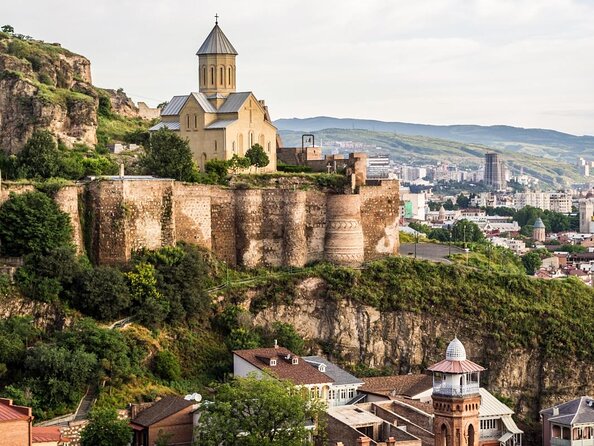
- Rike Park and Narikala at night set the tone with city views and Georgian-city energy
- Gergeti Trinity Church at about 2,170 meters gives you big mountain scenery
- Qvevri wine culture at Twins Wine Cellar plus tastings tied to the route
- UNESCO sites in Mtskheta and cave monasteries like Vardzia
- Canyons, waterfalls, and boat time in Western Georgia
- Batumi by the sea ends the tour with parks, gardens, and Roman-era ruins
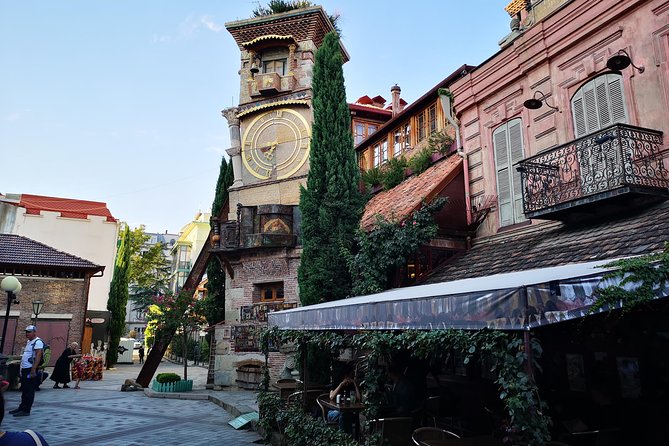
Tbilisi warm-up: Rike Park, Narikala, Abanotubani, and Mtatsminda
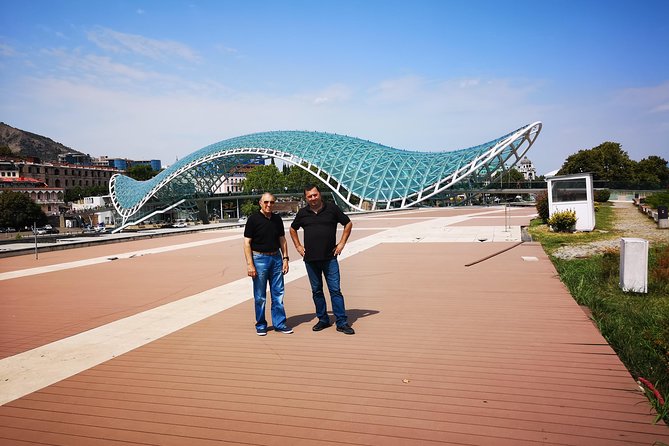
Day 1 is a smart “get your bearings fast” walk through the city. You start in Old Tbilisi, cross into the modern riverfront vibe at Rike Park, then climb up for one of Tbilisi’s must-dos, Narikala Fortress. Rike Park is not just a pretty green space. Its layout is designed so that, from above, the pathways form a large-scale map of Georgia, which is a fun way to get a mental picture of the whole country before you drive out into it.
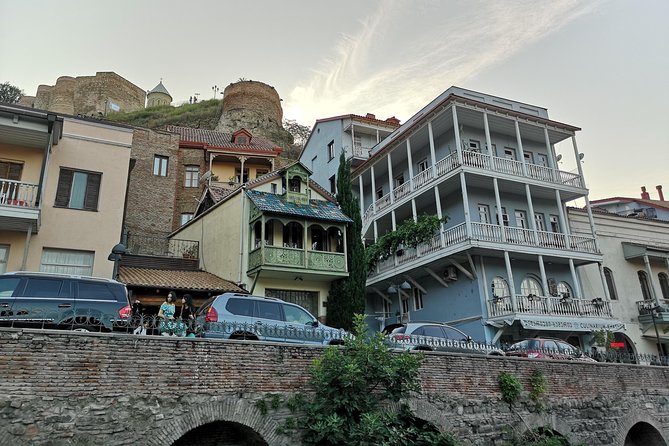
Narikala Fortress is the kind of sight you understand instantly, even if you do not memorize every historical detail. It overlooks the Mtkvari (Kura) River, and the views are especially striking at night. The fortress sits between the sulfur baths area and the botanical garden, so it feels like the city’s different layers all overlap here.
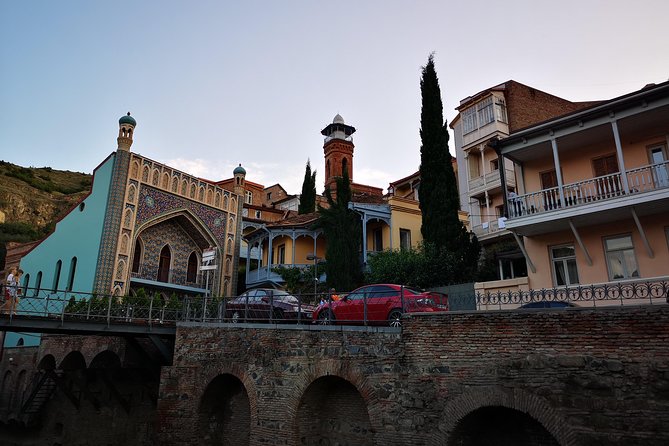
Then comes Abanotubani, Tbilisi’s famous sulfur baths neighborhood. This stop has a neat “how many histories can fit in one area” feeling. In a relatively compact district, you can spot different religious sites, including Georgian, Armenian, and Catholic churches, a mosque, a synagogue, and even the Ateshga fire temple.
The day ends with Mtatsminda Amusement Park on Mount Mtatsminda. The point is not just rides. It is the height. At roughly 770 meters, you get a wide view of Tbilisi, plus a break from serious walking with cafes, souvenirs, and the funicular.
Practical note: Day 1 is mostly strolling and climbing. Wear shoes you can hike in, and if you are sensitive to stairs, plan for a slower pace on Narikala.
Longer tours running out of Tbilisi:
- Discover Georgia: A 4-Day Private tour from Tbilisi
★ 5.0 · 53 reviews - Best of Armenia: private 2-3 days tour to Yerevan w/ family lunch
★ 5.0 · 38 reviews - Private 4-Day Tours & Transfers from Tbilisi to Top Georgia Spots
★ 5.0 · 36 reviews
The Georgian Military Highway day: Zhinvali, Ananuri, Gudauri, Gergeti, Gveleti
On Day 2, you point your camera north toward the mountains. First stop is the Zhinvali Reservoir and the Zhinvali Dam, a clean, scenic introduction to the Kazbegi direction.
Next is Ananuri Fortified Castle Ensemble, right along the Military Highway route. This place works because it gives you fortresses, churches, and river scenery in one package. You get a circuit wall with turrets, plus multiple churches in the ensemble, including the Church of Virgin and the Assumption church. Even if you only spend your time looking at the facades and the setting, it feels like you are seeing how Georgia defended itself while still building beautiful sacred spaces.
After Ananuri, you head to a more pop-color stop: the Russian Georgian Friendship Monument at Gudauri, also known as the Gudauri panorama. It is Soviet-era themed with mosaics and colorful symbolism, and it is exactly the kind of “surprise stop” that breaks up the drive.
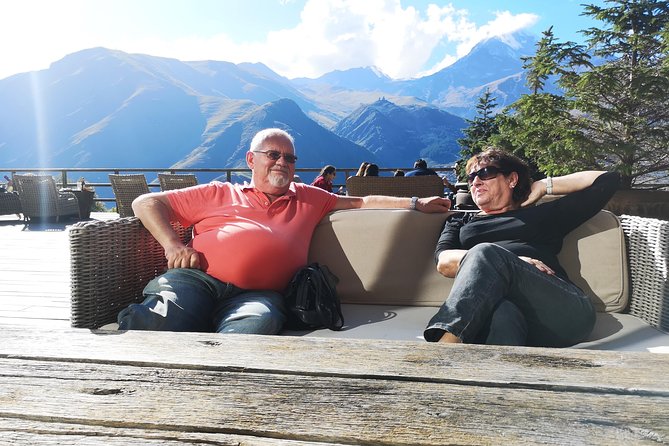
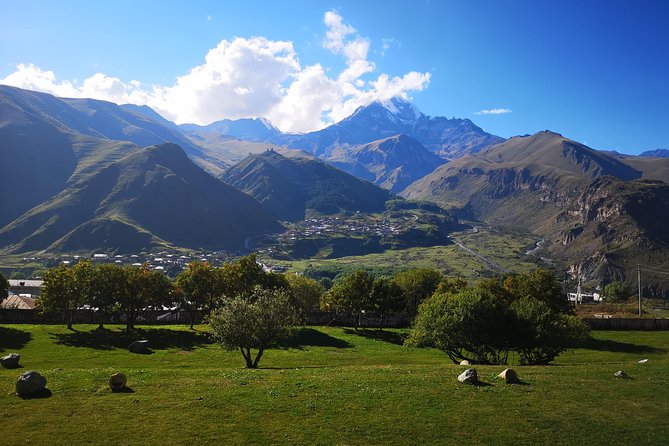
Then you hit the highlight many people picture when they think of northern Georgia: Gergeti Trinity Church near Stepantsminda. It sits at around 2,170 meters beneath Mount Mkinvartsveri, so the setting is all about altitude and wind and that classic mountain silhouette.
The day finishes with Gveleti Waterfall, a smaller nature moment back in the village of Gveleti. It is a good contrast after big peak views, and it gives your legs a different kind of reset.
Practical note: High viewpoints often mean quick weather swings. Bring a light layer and keep a scarf or light jacket handy.
Kakheti day of castles and qvevri wine: Ujarma, Alaverdi, Twins, Batonis-Tsikhe, Tsinandali
Day 3 is one of the best “Georgia in layers” days. You start at Ujarma Fortress, a 5th-century fortress tied to the region’s older power stories and a royal past. The description leans into the mysterious vibe, and once you arrive, that feeling makes sense. It is the kind of ruin where your imagination does some work for you.
Next is Gombori Pass, with a quick stop to try Gios Herbal tea. This is the kind of simple moment that keeps the day from becoming one long parade of monuments.
From there, you go to Alaverdi St. George Cathedral, part of a long monastic tradition. The cathedral is from the early 11th century, and it is also associated with older monastery structures. One practical detail: the stop is timed to give you enough time to look around and not just snap a photo and move on.
Then comes Twins Wine Cellar, which is a real standout for wine lovers. It focuses on qvevri wine culture, with a museum setup that explains the production process and the tools behind pitcher wine. The museum even features a large pitcher statue, and you get to learn about the collection, grapes, and the winemaking approach tied to Georgia’s underground tradition.
After wine education, you visit Batonis-Tsikhe Fortress (The Master’s Fortress). This complex has a mix of royal residence history and military purpose, plus churches and ruins that reflect how the fortifications evolved over time.
You end at Tsinandali Palace, connected to Prince Alexander Chavchavadze. This stop is more than a building. It comes with landscaped gardens and a historic winery context, and you get a chance to sample Tsinandali wine as part of the visit. The payoff is that you go from battlefield-style fortresses to wine estate life without the day feeling disconnected.
Why this day works: you get religion, power, and food culture in the same rhythm. And if you care about why Georgian wine tastes the way it does, qvevri history makes the rest of the trip click.
Kakheti to Mtskheta: Bodbe and Sighnaghi walls, then Jvari and Svetitskhoveli UNESCO sights
Day 4 starts in Bodbe Monastery of St. Nino, just a short drive from Sighnaghi. The monastery is associated with the burial place of St. Nino, and it has a long history of repairs, restorations, and changes in use. Even if you know little about Georgian Christian history going in, the site helps you understand why this region matters so much.
Then you move to Sighnaghi’s City Walls, a medieval remnant with over 20 towers. Not every section is open for walking, but the views over the Alazani Valley are a big reason to go. It is one of those stops that feels made for slow wandering and looking back over the route you just drove.
You also have time for The Sighnaghi Museum with art and local history. If you like Georgian painters, this museum includes works connected to Pirosmani, plus rotating or traveling exhibits that you might not see in Tbilisi.
After Kakheti, you swing toward Mtskheta, one of Georgia’s spiritual anchors. Stop 4 is Jvari Church, a 6th-century monastery site on a hill across from Mtskheta at the confluence of the Aragvi and Mtkvari rivers. UNESCO-listed sites like this are where the architecture stops being “old” and starts being strategic, because the placement is part of the story.
Next is Svetitskhoveli Cathedral, an 11th-century architectural wonder and another UNESCO World Heritage site. It is the kind of place where you notice the details even when you are not reading every sign. The cathedral complex includes the church, a gate, a bell tower, and more, and it is connected to preserved relics and long religious importance.
Finally, Day 4 includes Uplistsiche Cave Town, a rock-hewn settlement with roots stretching back far into the history of the Caucasus. This stop is included to give you a “before the churches” feeling, because rock cities show another chapter of Georgia’s human story.
Practical note: This is a walking-heavy day. Bring water and plan on taking your time at the views, not sprinting.
Another kind of day out from Tbilisi:
- Day Trip to Kakheti Wine Region Including 9 Wine Tastings
★ 5.0 · 2,774 reviews - Highlights of Caucasus Mountains-Jinvali,Ananuri,Gudauri,Kazbegi(Group tour)
★ 5.0 · 2,682 reviews - Day Trip to Kazbegi and Gudauri
★ 5.0 · 2,009 reviews - Day Trip to Mtskheta Gori and Uplistsikhe
★ 5.0 · 1,801 reviews
Vardzia caves, Rabati in Akhaltsikhe, then Borjomi mineral water
On Day 5, you head into cave and fortress territory. First up is Vardzia, the famous cave monastery complex built during the reign of King George III and Queen Tamar. The legend about how it got its name is part of the charm, but the real reason to go is the scale. Vardzia feels like a whole landscape made of stone rooms, with a medieval monastery life carved right into the cliff.
Next is Rabati (Akhaltsikhe) Castle, a fortress ensemble in the center of Akhaltsikhe. It includes several parts from different eras, including a 14th-century castle element, a fortress church, a palace, and the Church of St. Marine. It is a good reminder that Georgia sits at crossroads, so styles layer on top of each other.
You finish with Borjomi Central Park in Central Georgia, famous for mineral water. The area includes the Romanov Palace, ornate interiors, and trails connected to nature in the Borjomi-Kharagauli National Park region. The stop also connects you with Green Monastery (Mtsvane Monastery), known for its green-tinged stones.
Practical note: This day is about variety. You will see cliff-life cave history, fortress history, then more relaxed park pacing.
Western Georgia underground and UNESCO mosaics: Prometheus Cave, Gelati, Kutaisi
Day 6 shifts the mood to caves and monasteries. First is Prometheus Cave near Tskaltubo. Prometheus is famous for stalactites, stalagmites, underground rivers, and lakes. The big practical win here is the option of a boat tour on an underground lake. It is one of those activities that gives you a different perspective of the cave world without needing special skills.
Then you stop in Tskaltubo, a mineral water spa town. The visit is described as a chance to see where Tshaltubo mineral water comes from geologically and hydrochemically, and you get the sense this is a place built around the idea of natural springs.
After that comes Gelati Monastery, one of the main cultural stops in the Kutaisi area. It is a UNESCO-listed religious and educational center with mosaics and frescos. The monastery yard is associated with King David the Builder, who is buried there.
Day 6 ends in Kutaisi, with time to explore the historical part called the Royal District. The route goes around areas near the White Bridge and central streets, so you get an easy city-walk feeling after earlier days of hills and stone sites.
Practical note: Caves can be cool. Bring a layer even if your day started warm.
Canyon day: Okatse hanging trail, Kinchkha waterfalls, Martvili boat trip
Day 7 is the outdoors day, the one you will thank yourself for if you like moving your body and getting fresh air. You start with Okatse Canyon and its famous hanging trail, a 780-meter walk that feels like you are out in the sky. The trail passes through Dadiani historic forests, which helps it feel more than just a “photo platform.” There is also a panoramic view point designed for easy photos.
Then you visit Kinchkha Waterfall, described as a canyon with two waterfalls. The stop includes a sense of adventure, because the place is known for opportunities to swim in the canyon and even set up tents by the riverbank. Even if you do not camp, it is a scenic nature moment.
Next is Martvili Canyon, where you can take a boat trip along a 300-meter section of the Abasha River. The point here is the canyon walls and the way the waterway shapes the view. The description also mentions the chance to explore under-water areas, so it is a day built for active travelers who like water scenery.
Quick reality check: This day is only as comfortable as your shoe choice. Bring non-slip footwear and be ready to get a little damp.
Svaneti in full swing: Ushguli UNESCO village, Lamaria church, Hatsvali views, Chalaadi glacier
Day 8 is the big highland day. You go to Ushguli, a community in the Mestia area near the Shkhara massif. Ushguli is made up of four villages, with elevations listed roughly between 2,060 and 2,200 meters. It is described as the highest settlement in Europe, and the central village, Chazhashi, is a UNESCO World Heritage Site and declared a museum.
You also visit LaMaria Church, a medieval church in Upper Svaneti linked to the Mother of God, locally known as the Lamaria church.
Then you get Hatsvali Ski Resort area for views toward Ushba Mountain and Mestia. Even if you skip the ski setting, the viewpoint helps you understand how tightly packed the peaks are in this corner of Georgia.
Next comes the Svaneti Museum of History and Ethnography, founded in 1936. This stop matters because it gives context for the stone villages and old life. You can see icons and engravings, manuscripts, medieval weaponry, jewelry, pottery, textiles, and ethnographic artifacts, so you are not just looking at architecture.
Finally you reach Chalaadi Glacier, described as the only glacier that extends into the forest zone. It is at the source of the Mestia-Chala river area, and the visit is timed to let you see this high-mountain feature in context.
Practical note: Altitude days can feel slow even when you are not doing much walking. Pace yourself.
Batumi: dendrology, boulevard energy, Roman history, and the botanical garden finale
Day 9 and Day 10 put the Georgia loop into beach-mode.
Day 9 starts with Shekvetili Dendrological Park, a 60-hectare garden with a mix of local and exotic plants. It is a different kind of sightseeing, more about paths and plant variety than churches and towers.
Next you reach Batumi Boulevard, the seaside promenade filled with cafes, fountains, sculptures, and family-friendly distractions. The boulevard’s construction began in 1881, so it has that long-seaside-city feel.
After that you visit Gonio Fortress. This is one of the older sites in the country, described as the oldest fortress of Georgia. Built by the Romans in the 1st century AD, it later saw Byzantine occupation and then Ottoman use. It covers a large footprint with stone walls and towers, and it helps you end the tour thinking beyond Georgia’s medieval period.
On Day 10, you close with Batumi Botanical Gardens, covering roughly 108.7 hectares along the southern-western coast. The descriptions focus on its plant history, including how exotic plants were introduced over time and how the garden sits in a zone that was previously forest-covered. It is a relaxing “last morning” that fits the day-end return to Old Tbilisi meeting point.
Price and logistics: is $850 good value for what you get?
At $850 per person for about 10 days, this is not a cheap trip, but it is not overpriced for what is packed in. You get a 3-star hotel for 9 nights, an air-conditioned vehicle, WiFi on board, and airport transfers. On top of that, entrance tickets and museum or attraction fees are included, along with all fees and taxes.
The meal plan is generous, but not total:
- Breakfast is included for 10 days
- Lunch is included for 10 days
- Dinner is included for 6 days
- Alcohol drinks are not included
So you will have about 4 evenings where dinner is on your own. That can actually be useful. You can try a local place near your hotel, especially in Batumi, without feeling locked into one schedule.
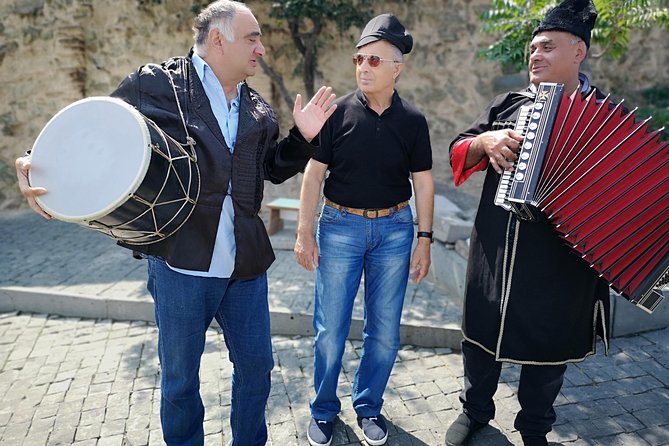
The tour also highlights Georgian cuisine and wine as part of the experience, and the reviews strongly emphasize the food. If you love eating well while someone else handles timing and transport, this is where the value shows.
One more practical point: the tour is private to your group. That does not mean you get a long private drive with no stops. It means you are not sharing the day with strangers in the same group dynamic.
The guide factor: why David’s presence matters on a packed route
Across the trip, the biggest “quality of life” upgrade is not the hotels. It is the way the route is explained and kept moving. The guide named David is described as professional and able to turn stops into stories you remember, not just a photo checklist. That matters on a tour like this because there are a lot of sites. When someone helps connect the dots, you feel like each day has a point.
Who should book this Georgia tour, and who should skip it
This tour is a strong fit if you:
- want a first-timer friendly loop that covers mountains, monasteries, and Batumi without independent planning
- care about Georgian food and the rhythm of regional stops
- prefer having transport and entrance fees handled
- enjoy active days with views and a few boat or cave experiences
It may not suit you if you:
- want lots of free time and slow pacing
- hate paying separately for alcohol and for dinner on some evenings
- get stressed when a schedule is packed from start to finish
Should you book? My straight answer
Book it if you want maximum Georgia in 10 days with minimal admin, and you like the idea of trading free time for guided structure. This route makes sense for people who want the classics, plus enough variety to keep each day feeling different, from Gergeti’s church views to Prometheus Cave boat time to Gonio Fortress Roman history.
Skip it if your ideal vacation is quiet, unplanned, and flexible. This one is organized, and it will keep you busy.
If you do book, pack comfy shoes, a light layer for cooler mountain or cave stops, and plan a small budget for meals and drinks on the evenings when dinner is not included.
FAQ
Where does the tour start and end?
The tour starts at Old Tbilisi, Tbilisi, Georgia. It ends back at the same meeting point.
What is included with the tour price?
The package includes a 3-star hotel for 9 nights, air-conditioned vehicle with WiFi on board, private transportation, entrance tickets for museums and attractions, all fees and taxes, and airport transfers. Meals are also included as breakfast for 10 days, lunch for 10 days, and dinner for 6 days.
Are museum and attraction tickets included?
Yes. Entrance tickets for museums and attractions are included, along with all fees and taxes.
Is pickup offered?
Yes. Pickup is offered, and the meeting point is near public transportation.
What meals are not included?
Dinner is not included for 4 days, and alcohol drinks are not included.
How do group and privacy work?
It is a private tour/activity, so only your group participates. Group discounts are mentioned, and most travelers can participate. Confirmation is received at booking time.
Recently added around Tbilisi
- Private Adorable City Tour of Tbilisi★ 5.0 · 3 reviews
- Old tbilisi walking tour & wine tasting★ 5.0 · 9 reviews
- Tbilisi Airport to Gudauri, Bakuriani, Batumi, Tbilisi★ 5.0 · 3 reviews
- full day Kazbegi-Gudauri-jvari -from Tbilisi★ 5.0 · 6 reviews
- Vardzia. Lake Paravani, Khertvisi & Lomisa castle, Rabati★ 4.5 · 12 reviews
- Your unique photo session in Tblisi, Georgia★ 3.5 · 4 reviews
- Wine Tasting in Tbilisi★ 5.0 · 8 reviews
- Wine promenade in hospitable Tbilisi★ 5.0 · 17 reviews
Multi-Day Georgia Tours from Tbilisi, compared.
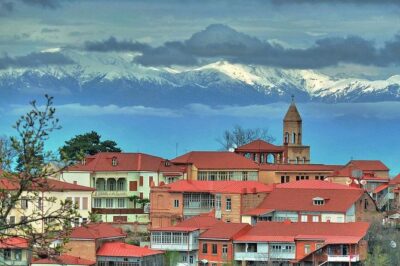
Discover Georgia: A 4-Day Private tour from Tbilisi
Read our review →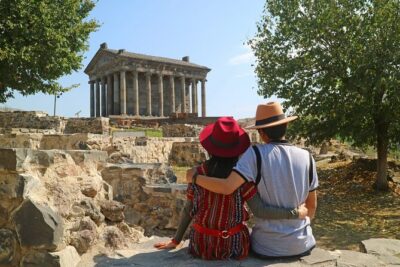
Best of Armenia: private 2-3 days tour to Yerevan w/ family lunch
Read our review →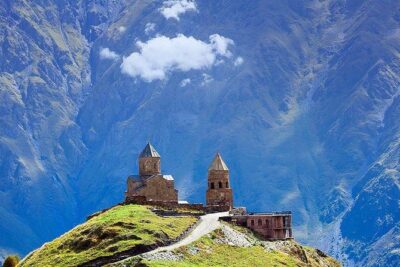
Private 4-Day Tours & Transfers from Tbilisi to Top Georgia Spots
Read our review →
5 days tour package.Georgia for first time visitors
Read our review →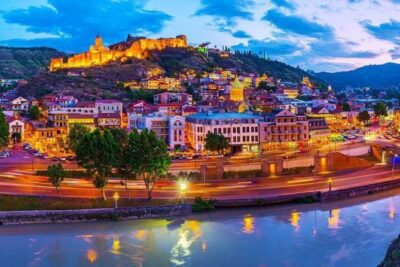
Private 3-Day Tours & Transfers from Tbilisi to Top Georgia Spots
Read our review →
3 Day Tusheti Tour Explore Unspoiled Wilderness
Read our review →
Private 4 days Food & Wine and Sightseeing tour to Kakheti, Kazbegi, Mtskheta.
Read our review →Browse the lists this tour appears in