
Reviewed · TBILISI
Tbilisi ‘Dive into the Past’
Tbilisi has a talent for stacking eras on top of each other, and this old-town loop makes you walk through that layering. I especially love the focus on the oldest sulphur baths and the way the route also includes a small, memorable moment at the marionette theater windows. One heads-up though: this is a stairs-heavy walk, so you will want sturdy shoes.
I like that the cost is low for what you get. It is $25 per person and the tour includes admission tickets at each stop, plus a mobile ticket you can keep on your phone. It is offered in English, and it is a private activity, so your group stays together.
The tone is friendly and local. From what I have seen in firsthand feedback, even people from Tbilisi often end the tour surprised by corners they thought they knew. If you enjoy learning the city by walking it, you are in the right place.
Key highlights you will actually feel on the route

- Old sulphur baths context at the Tbilisi Antique Archaeological Museum, with admission included
- Narikala Fortress stop built around views and long-time importance, with admission included
- Betlemi Street Stairs for that real old town feel, with plenty of walking
- Dzveli Tbilisi Sulphur Waterfall for a quick reset moment tied to the sulphur theme
- Rezo Gabriadze Marionette Theater for the chance to see marionettes in action
- Anchiskhati Basilica and the V century wall ruins to round out the historical sweep
How this Tbilisi walking tour fits together in 4 hours
This is the kind of tour that works because it follows a simple story line. You start in the old town with sulphur bath history, climb toward fortress ground, then keep moving through streets that feel like they were designed for foot traffic. Along the way you get religion, fortifications, and culture, all in a tight time frame.
The total time is about 4 hours, and the itinerary is paced with short stops. That matters. You are not stuck at one place for ages. Instead, you get frequent “change of scene” moments, which makes the walking feel shorter and more interesting.
You also get included admission tickets at every listed stop. For your budget, that is the big deal. Instead of paying separately for each site, you spend your money once and focus on the experience.
Finally, you travel as a private group. That means less shuffling around, and you can ask questions without feeling like you are competing with a crowd.
More around Tbilisi worth an open tab:
- Day Trip to Kakheti Wine Region Including 9 Wine Tastings
★ 5.0 · 2,774 reviews - Highlights of Caucasus Mountains-Jinvali,Ananuri,Gudauri,Kazbegi(Group tour)
★ 5.0 · 2,682 reviews - Day Trip to Kazbegi and Gudauri
★ 5.0 · 2,009 reviews
Meeting point and start time, so you do not waste your morning

The tour meets at the Sayat Nova Sculpture (MRQ5+WHF, Tbilisi). The start time is 10:00 am, and it ends back at the meeting point. That return is useful, because it makes the day plan easier. You can treat this like a half-day anchor and then explore the area afterward.
It is near public transportation, which helps if you want to arrive without stressing about parking. Also, the tour uses a mobile ticket. This is small, but it saves time on your phone instead of digging for printed paperwork.
Since confirmation happens within 48 hours (subject to availability), I suggest you book with enough buffer if you are on a tight schedule. And because the tour requires good weather, have a backup plan for your day if conditions change.
Stop 1: Tbilisi Antique Archaeological Museum and the oldest sulphur baths
Your first “time layer” comes fast. At the Tbilisi Antique Archaeological Museum, you get a look at the oldest sulphur baths, discovered in the center of the old town. The museum stop is about 30 minutes, with admission included.
Why this works well for you: Tbilisi is famous for sulphur bathing culture, but this stop gives you the starting point. It is not just a catchy idea. It is a historical foundation that explains why sulphur shows up again and again in the way the city treats health, comfort, and everyday life.
What to expect in real terms is a museum-style start. That means you will likely get a bit of context before you go outside. Then, once you leave, the sulphur theme feels more connected instead of random.
Possible drawback: if you prefer outdoor sights over indoor ones, you might find the opening museum stop slightly more “information first.” Still, it sets you up for the rest of the route.
Stop 2: Narikala Fortress, where views replace explanations
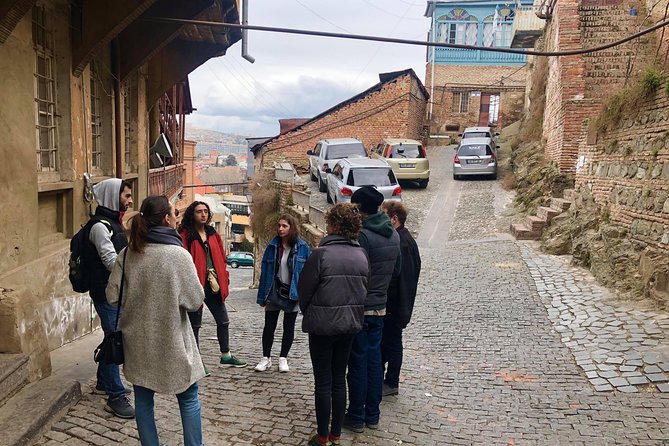
Next comes Narikala Fortress, with about 30 minutes on site and admission included. This is the main fortress for many centuries, and that long lifespan is the whole point. You are not just looking at a structure, you are looking at strategic ground that mattered for a long time.
You’ll likely notice how the fortress stop changes your perspective. Fortifications are built for sight lines, so the views tend to do the teaching. When you step into that space, you understand why this location held power.
A practical tip for you: wear shoes with grip. This is not just “walking near something historical.” You are on uneven old ground that can be slippery if weather has been wet.
Another small consideration: if you do not enjoy heights or steep edges, spend your time at a comfortable viewpoint and take your photos without rushing.
Another kind of day out from Tbilisi:
- Day Trip to Mtskheta Gori and Uplistsikhe
★ 5.0 · 1,801 reviews - Tbilisi Walking Tour Including Cable Car and Traditional Bakery
★ 5.0 · 1,310 reviews - Day Trip to Armenia Including Homemade Lunch
★ 5.0 · 1,162 reviews - Kakheti Wine Region: Signagi and Bodbe Tour with 10 Wine Tastings
★ 5.0 · 1,019 reviews
Stop 3: Betlemi Street Stairs, the old town reality check
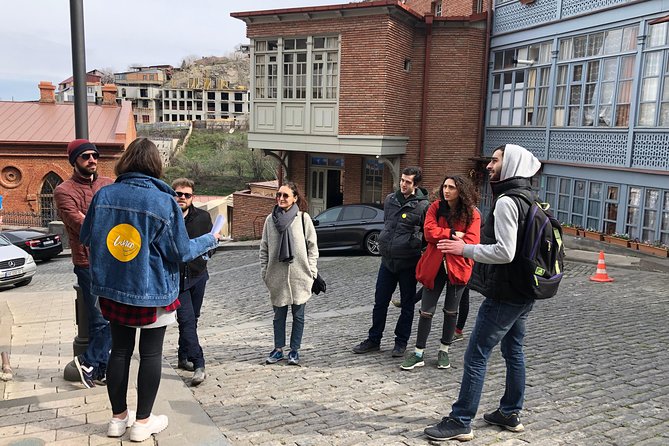
Then you earn your old-town badge of honor at Betlemi Street Stairs. The itinerary calls for about 1 hour here, and yes, it is a long walk up and down through the old town.
This part is important. It is where you feel Tbilisi as a pedestrian city, not a car city. Streets like this shape how people move, how neighborhoods connect, and how daily life works. Even if you are only “half listening” to the explanation, the walk itself teaches.
For your comfort:
- Plan for stairs, not gentle slopes.
- Pace yourself. You do not have to power up everything at once.
- Bring water if it is warm, since this section keeps you moving.
The potential drawback is obvious and unavoidable: if stairs are tough for you, this stop may feel like the hardest part of the entire tour. The good news is that the rest of the itinerary after this tends to be shorter and more stop-and-go.
Stop 4: Dzveli Tbilisi Sulphur Waterfall, a quick sensory reset
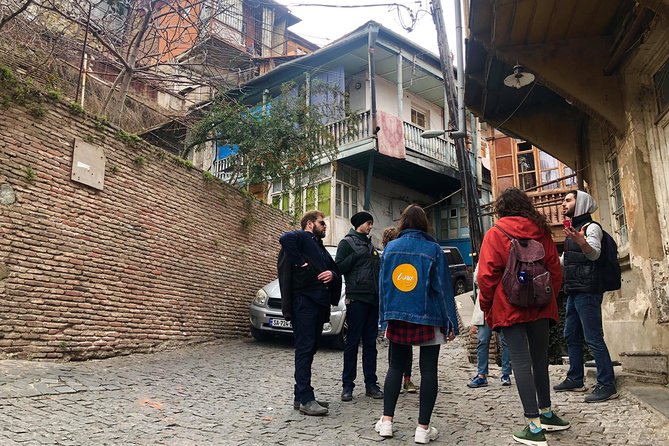
After the stair effort, you move to Dzveli Tbilisi Sulphur Waterfall for about 15 minutes, with admission included. This is where people get so fresh and clean even with just stopping by.
That phrasing matters. It signals that this is not meant to be a long, formal visit. It is more like a brief sensory moment tied to the sulphur theme you already started learning about.
Why you will probably like it: after fortress views and stair walking, the sulphur waterfall gives you a different kind of experience. It is about atmosphere and a sense of place, not a long checklist of rooms.
If you want a smooth experience, treat this as your quick recharge stop. Take a few minutes to observe, then keep moving rather than lingering too long.
Stop 5: Rezo Gabriadze Marionette Theater, chance-based magic
Next is Rezo Gabriadze Marionette Theater for about 10 minutes, admission included. Here, the highlight is the chance to see Georgian marionettes coming out from their tiny windows.
This is one of the most playful parts of the tour, and it is also why you may feel like you experienced something “more local than touristy.” Marionettes connect to storytelling traditions, and the short window moments are memorable because they happen fast.
The key word is chance. If you get lucky, you catch that window action. If you do not, you still get the theater environment and the cultural idea. Either way, it is short and fun.
Practical tip: if you are visiting with kids or you simply like quirky culture, this stop is worth looking forward to. It breaks the rhythm after the more physical segments.
Stop 6: Anchiskhati Basilica, Tbilisi’s oldest basilica stop
Now you shift to religion and older stone. Anchiskhati Basilica is listed as the oldest Basilica in Tbilisi, and your time here is about 10 minutes with admission included.
Even if you are not a “church architecture” person, I think this stop hits because it gives you a specific landmark label. Oldest basilica is not vague, it is a clear marker in the city’s timeline. And in a tour that already covered baths and fortress ground, you get a third pillar of the city: spiritual life.
What to do to make it worthwhile: take a moment to look slowly, then move on. Ten minutes can feel tight, but it is enough to absorb the main points without turning it into a rushed photo session.
Stop 7: Tbilisi Wall Ruins, the V century line you can still feel
The last stop is Tbilisi Wall Ruins, described as V century wall ruins, with about 10 minutes and admission included.
This ending works because it brings you back to the idea of protection and endurance. You started with a fortress stop. Now you finish with the remnants of walls, which is a different visual style but the same theme: this city has been defending itself in different forms for a very long time.
If you like history that you can physically walk past, you will appreciate this. It is not a lecture. It is a location you finish at, with enough time to look and then wrap your head around the city’s layers.
Price and value: why $25 feels fair here
At $25 per person, this tour is not trying to be expensive. The value mainly comes from the included admissions at each stop. When you add up multiple site tickets, that is where the budget balance improves quickly.
The other value piece is time efficiency. At around 4 hours, you are covering museum history, a fortress landmark, a stair walk, sulphur-related culture, a theater culture moment, and two historical religious or structural sites. You are not paying for one theme only.
Who this is best for:
- You want an organized walk without spending extra on ticket line items.
- You like “small to medium” stops rather than long stays.
- You enjoy being guided through meaningful landmarks and not just watching scenery.
Who should think twice:
- If you struggle with stairs, the Betlemi Street Stairs section is likely the deciding factor.
- If you want a super slow pace with long museum time, this may feel too tight.
Private tour energy: why it feels better than a big group
This is a private tour/activity. Only your group participates. You also get the basic support of a guide team, which matters on a walking route like this where finding the next stop is part of the experience.
The main benefit you will notice is attention. Instead of being one person in a large pack, you can ask questions that fit what you are seeing right then. And because the stops are short, you get more chances to connect the dots.
Based on the tone in firsthand feedback, the team comes off as friendly and interesting, not stiff or scripted. That vibe matters, especially if you are local or you think you already know a lot. The route is designed to show that Tbilisi still has surprises.
Practical tips so you get the most from every stop
A few things can make this tour smoother, especially if you are arriving from other parts of the city:
Wear real walking shoes. Stairs and uneven old streets are part of the deal.
Keep your pace steady on the Betlemi stairs. If you rush, you will feel it later.
Bring a water plan. The tour is only about 4 hours, but you are moving, and you will feel better if you are not thirsty.
Dress for weather. The tour requires good weather, so if it is wet or uncomfortable, be ready for adjustments.
Have your phone ready. The mobile ticket is part of the process, and you will want it easy to access.
Should you book this Tbilisi old town past-and-present walk?
If you like walking tours that connect sites into a story, I think you should book it. The price is reasonable for a 4-hour private route, and the included admission tickets are a strong value booster. The mix of sulphur culture, fort ground, old streets, and short cultural stops makes it feel like you covered more than one “type” of Tbilisi.
I would only hesitate if stairs are a real challenge for you. Betlemi Street Stairs is the big physical hurdle. If you can handle that, this tour is a smart way to see multiple layers of the city without turning your day into a museum marathon.
FAQ
How long is the tour?
It is approximately 4 hours.
What language is the tour offered in?
The tour is offered in English.
Where does the tour start?
The start point is Sayat Nova Sculpture (MRQ5+WHF, Tbilisi, Georgia).
Is the tour walking and are there stairs?
Yes. This is a walking tour and includes a lot of stairs.
Is the tour private?
Yes. Only your group will participate.
Is the admission ticket included?
Yes. Admission tickets are included for each listed stop.
Is there free cancellation?
Yes. You can cancel for a full refund up to 24 hours in advance of the experience start time. The tour also requires good weather, and if it is canceled due to poor weather you will be offered a different date or a full refund.
Recently added around Tbilisi
- Private Adorable City Tour of Tbilisi★ 5.0 · 3 reviews
- Old tbilisi walking tour & wine tasting★ 5.0 · 9 reviews
- Tbilisi Airport to Gudauri, Bakuriani, Batumi, Tbilisi★ 5.0 · 3 reviews
- full day Kazbegi-Gudauri-jvari -from Tbilisi★ 5.0 · 6 reviews
- Vardzia. Lake Paravani, Khertvisi & Lomisa castle, Rabati★ 4.5 · 12 reviews
- Your unique photo session in Tblisi, Georgia★ 3.5 · 4 reviews
- Wine Tasting in Tbilisi★ 5.0 · 8 reviews
- Wine promenade in hospitable Tbilisi★ 5.0 · 17 reviews