
Reviewed · OLD TBILISI WALKING TOURS
Classic Tbilisi Walking Tour
This is the kind of Tbilisi tour that helps you read the city like a story, from Soviet-era landmarks to hilltop views at Narikala Fortress. You’ll also move through places you can’t really reach by hopping in and out of taxis, especially around the Abanotubani sulfur bathhouse area.
I like two things most. First, the walk is structured around major squares and streets, so Freedom Square to Sololaki makes instant sense. Second, the included aerial cable car to Narikala gives you skyline views without eating up your whole day.
One possible drawback is that the day includes stairs and a fair bit of uphill walking, plus a church dress code. If you hate rules, you’ll want to pack a scarf, and if you hate hills, save your biggest climbs for another day.
Key highlights worth aiming for
- A 10:00 am start at Freedom Square, so you get your bearings early
- Betlemi Churches + ancient fire-temple remains, a rare layered story in one stop
- Bridge of Peace as a modern pause over the Mtkvari River
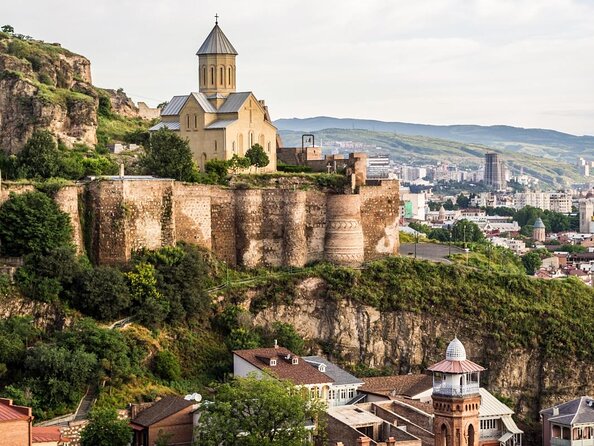
- Included cable car to Narikala Fortress, then time for city views from the hill
- Finish in Abanotubani near the Monument Fountain Falcon and Pheasant, right where the old sulfur-bath neighborhood feels alive
Tbilisi in about 3 hours: the plan, the pace, the payoff

This tour is built for a short Tbilisi stay, about 3 hours, with an expert guide leading the flow. You start at Freedom Square at 10:00 am and end in Abanotubani, which is a smart way to close the loop on old and new Tbilisi.
The walking portion is the point, so you should expect a steady rhythm. If you’re the type who likes to stop, look up, and ask why a building or street matters, this format works well.
Value-wise, the price of $134 per person is easier to justify because you get a professional guide and the aerial cable car ride to Narikala Fortress included. Those two items alone usually cost more than you expect when you’re pricing things separately.
More walking tours of Old Tbilisi:
- Tbilisi Walking Tour Including Cable Car and Traditional Bakery
★ 5.0 · 1,310 reviews - Tbilisi:Evening Walking & Talking Tour with Wine & Boat Ride
★ 5.0 · 572 reviews - Old Tbilisi Highlights walking tour with wine & 10 tastings
★ 5.0 · 276 reviews
Freedom Square and Sololaki’s renovated streets: your first real Tbilisi “anchor”
You meet your guide at Chronograph2 at Freedom Square, near the old city hall area. From there, you begin with a stroll along Sololaki, including streets that have been recently renovated.
Freedom Square is not just a photo spot. It’s one of those places where you feel Tbilisi’s layers stacking up, from older street grids to more recent city changes. Your guide also helps connect what you see on the ground with the Soviet-era chapter of the city, so you’re not just looking at buildings, you’re learning how the city got shaped.
What I like here is the “warm-up” quality. You get to settle into the pace on relatively central streets before the route starts adding viewpoints and steps.
A small consideration: because this is a central start, you’ll want to arrive a few minutes early and be ready to walk right away.
Lado Gudiashvili Square to Kldisubani via Asatiani Street
Next you reach Lado Gudiashvili Square, and it’s a good checkpoint because it’s described as newly renovated. From there, the route follows Asatiani Street toward the Kldisubani district.
This is where the tour shifts from big-square theater into more human-scale Tbilisi. You’re walking through the kind of streets where you start noticing how neighborhoods sit next to each other, and how quickly the city changes as you move a few blocks.
Your guide’s job at this point is especially useful. When the streets narrow and the city feels more “local,” it’s easy to feel lost without context. The Soviet-era and broader historical story becomes clearer when you see how different areas evolved.
If you’re hoping for heavy museums at every stop, this section won’t be that. It’s more about street reading and orientation.
Betlemi Churches and the 5th-century Fire Temple remains above the street
Then you head toward the Lower and Upper Betlemi Churches. The route is pedestrian and moves upstairs, so plan for stairs and a bit of climbing.
Here’s one of the most interesting parts of the tour: the churches are connected to the remains of the Zoroastrian Ateshgah Fire Temple from the 5th century. That means you’re not only seeing a Christian-era site, you’re also tracking older religious history layered into the same hillside space.
The payoff is twofold. First, you get views around the church area, which helps you understand why this part of the city is built the way it is. Second, the story of a site that can shift meaning over centuries is exactly the kind of context that makes Tbilisi feel different from other cities.
Dress code matters at churches. For women, the expectation is a head scarf and a dress. For men, it’s long trousers. I strongly recommend carrying a scarf even if you think you’ll be fine, because it’s the easiest thing to fix fast.
Another kind of day out from Tbilisi:
- Day Trip to Kakheti Wine Region Including 9 Wine Tastings
★ 5.0 · 2,774 reviews - Highlights of Caucasus Mountains-Jinvali,Ananuri,Gudauri,Kazbegi(Group tour)
★ 5.0 · 2,682 reviews - Day Trip to Kazbegi and Gudauri
★ 5.0 · 2,009 reviews - Day Trip to Mtskheta Gori and Uplistsikhe
★ 5.0 · 1,801 reviews
Bridge of Peace: modern design over the Mtkvari River
After the church area, you move to the Bridge of Peace, a contemporary pedestrian bridge made of glass and steel. It’s designed in the shape of a bow and crosses over the Mtkvari River.
This stop works as a breather. You go from hillside stair climbing to open river views and a cleaner, modern city silhouette. It also helps you connect the “old layers” you’ve been seeing to the way Tbilisi keeps updating itself.
If you like taking photos, this is a good moment to pause. The bridge shape is eye-catching, and the river adds width to the scene so your pictures don’t feel cramped.
The only downside is time. You get enough to look and take a few photos, but this is still part of a walking route, so don’t expect a long, slow hangout.
Cable car to Narikala Fortress: 4th-century hilltop views you can actually reach
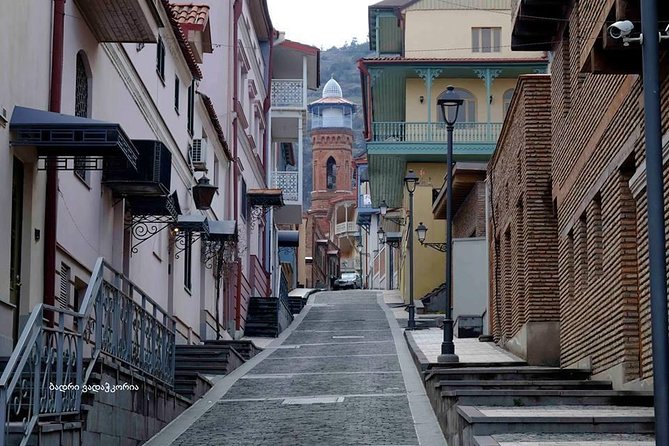
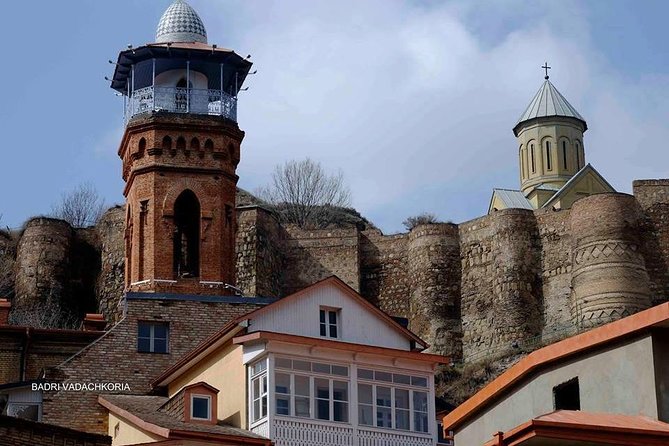
Now for the major payoff: you reach the aerial cable car station and ride up to Narikala Fortress. The fortress dates back to the 4th century, and the hilltop location makes it a natural viewpoint over the city.
Since the cable car ride is included, this stop is both fun and practical. You save effort, you gain altitude, and you still get the feeling that you truly went somewhere, not just looked at it from the street.
At the fortress, your guide helps with the historical angle, but the main value is the perspective. From up there, you can see how Tbilisi spreads and where the river cuts through. That visual map makes all the earlier walking feel less random.
This is also a good section to ask questions. If you’ve been wondering how different eras shaped the city, Narikala is the place to connect those dots because the view is so revealing.
One tip: bring something that works for the weather. The tour operates in all weather, so even if the forecast looks changeable, you’ll still likely ride and walk.
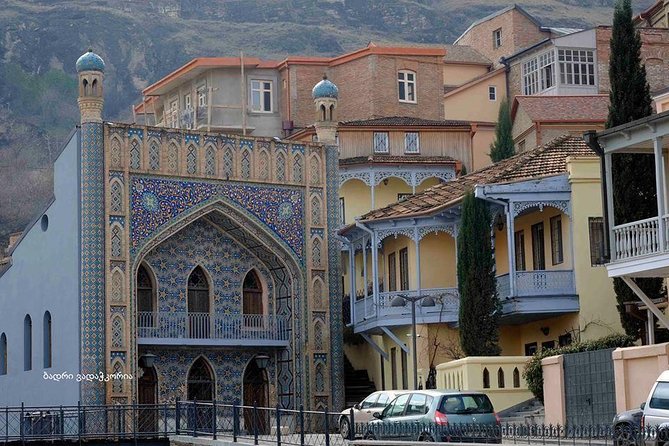
Abanotubani and the sulfur bathhouse area to Falcon and Pheasant
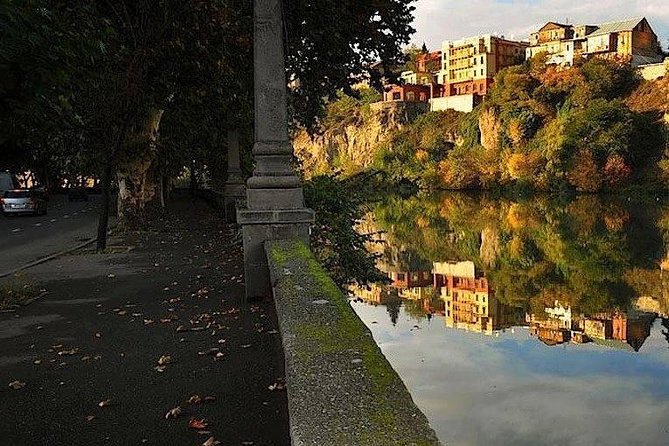
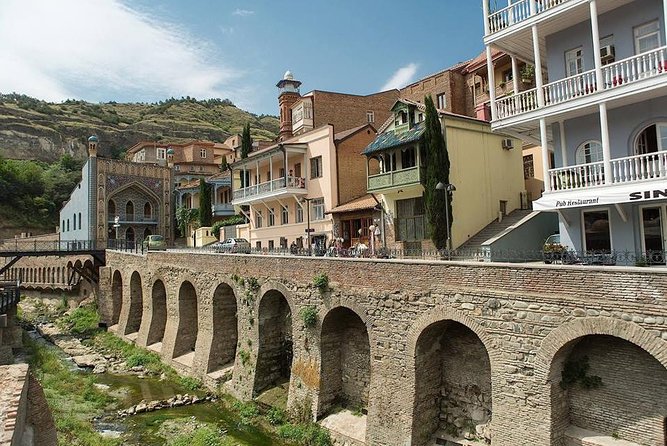
The tour finishes back downstairs in the Abanotubani area. You explore the fortress area first, then head down to the Sulfur Bathhouse neighborhood, reaching Meidan square and the surrounding area.
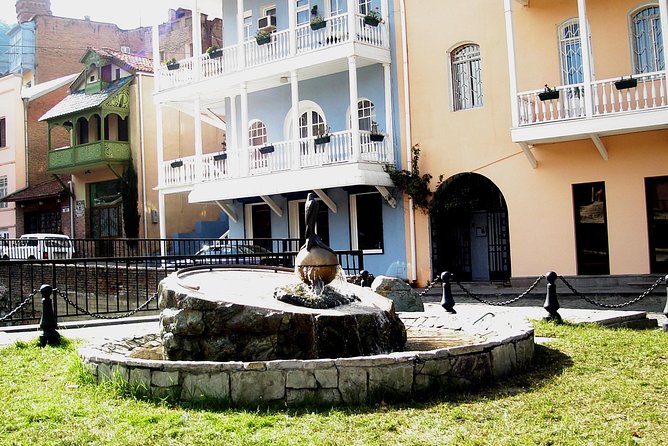
The ending at Monument Fountain Falcon and Pheasant is a smart choice, because it gives you an easy landmark to orient yourself once the organized part of the tour ends. It also means you’re right where many people naturally want to linger after a guided walk.
Abanotubani has a different feel from the squares and streets earlier in the route. It’s more atmospheric and less about big landmark backdrops. If you’re the type who likes to watch daily life and not just collect sites, this ending can be satisfying.
Practical note: because you’re descending from a fortress viewpoint, it’s a relief on your legs, but you’ll still want shoes with good grip. Old-city surfaces can be a little uneven.
Getting the most from your guide (and what to do with questions)
What makes this tour work is the guide. The experience is offered in English, and the guide style can make or break a short walking tour.
One guide name you might hear is Eka, described as friendly, engaging, funny, and flexible with preferences, while still answering questions with confidence. Even if your guide is someone else, aim for the same energy: ask questions early, not late.
Here’s how I’d play it to get the best value. In the first hour, ask one broad question about Soviet-era influence in the city. Then, tie your next question to the street in front of you, like why the bridge looks the way it does or why churches and older religious sites share the same hillside area.
Also, if you have mobility limitations, say so at the start. Since the tour includes stairs up to the Betlemi Churches and a cable car ride to Narikala, the guide can usually help you pace or adjust.
Price and what to budget next
At $134 per person for about 3 hours, the price is not the cheapest walking tour option in Tbilisi, but it’s not random either. You pay for a professional guide plus the aerial cable car ride to Narikala Fortress. That combination matters, because it cuts down your time spent buying tickets and figuring out routes.
What is not included is also clearly laid out. You’ll need to cover tips, lunch, and dinner if you plan meals on tour. There’s also no hotel pickup or drop-off, and no separate vehicle transportation to attractions.
So if you’re budgeting, plan around a simple day structure:
- Morning, guided walk plus cable car
- Then lunch on your own near where the tour ends, or later
- Finish your day in Abanotubani and pick dinner nearby
One more budgeting detail: the tour sets a minimum drinking age of 18 years. That matters if you’re hoping for any alcohol-related extras or tasting opportunities during your time in the city.
Who this Tbilisi walking tour suits best
This is ideal if you want a guided overview that still feels walkable and real. It’s especially good for:
- First-timers who need orientation in a short time
- Travelers who like a mix of Soviet-era context, modern design, and ancient layers
- People who enjoy viewpoints, including the Narikala hilltop moment
It might be less ideal if you hate stairs or you’re traveling with limited mobility. The Betlemi Churches stop is specifically a stair route upstairs, and you also spend time outdoors and moving between stops.
It’s also important to follow the church dress code. If you don’t want to deal with scarf and clothing rules, you might find that part annoying. On the other hand, it’s easy to solve if you pack for it.
Should you book this Tbilisi walking tour?
Yes, I’d book it if you want a practical “get oriented” day that still includes big hitters: Freedom Square, Betlemi Churches, the Bridge of Peace, and the cable car to Narikala Fortress, then a finish in Abanotubani.
Skip it only if your schedule is ultra tight and you cannot handle a structured walking route, or if church dress code rules would genuinely ruin your mood. Otherwise, this tour is a solid way to make your first hours in Tbilisi count.
FAQ
Where do I meet the guide?
You meet at Chronograph2, Freedom Square, Tbilisi 0105, Georgia.
What time does the tour start?
The tour starts at 10:00 am.
Where does the tour end?
The tour ends in Abanotubani near the Monument Fountain Falcon and Pheasant.
How long is the tour?
The duration is about 3 hours.
What is included in the ticket price?
The tour includes a professional guide and an aerial cable car ride to Narikala Fortress.
What is not included?
Tips, lunch, hotel pickup and drop-off, service of vehicle for transportation to/from attractions, and dinner are not included.
Is the tour offered in English?
Yes, it is offered in English.
Does the tour operate in all weather conditions?
Yes, it operates in all weather conditions, so dress appropriately.
Is there a dress code for churches?
Yes. Women are expected to wear a head scarf and dress. Men should wear long trousers.
Can I cancel for free?
Yes. You can cancel up to 24 hours in advance for a full refund.
Recently added around Tbilisi
- Private Adorable City Tour of Tbilisi★ 5.0 · 3 reviews
- Old tbilisi walking tour & wine tasting★ 5.0 · 9 reviews
- Tbilisi Airport to Gudauri, Bakuriani, Batumi, Tbilisi★ 5.0 · 3 reviews
- full day Kazbegi-Gudauri-jvari -from Tbilisi★ 5.0 · 6 reviews
- Vardzia. Lake Paravani, Khertvisi & Lomisa castle, Rabati★ 4.5 · 12 reviews
- Your unique photo session in Tblisi, Georgia★ 3.5 · 4 reviews
- Wine Tasting in Tbilisi★ 5.0 · 8 reviews
- Wine promenade in hospitable Tbilisi★ 5.0 · 17 reviews
Old Tbilisi Walking Tours, compared.

Tbilisi Walking Tour Including Cable Car and Traditional Bakery
Read our review →
Evening Walking & Talking Tour with Wine & Boat Ride
Read our review →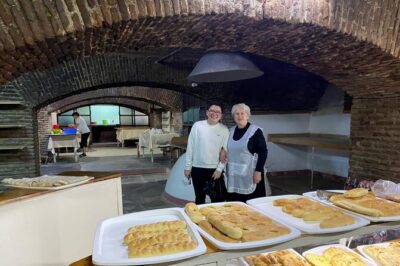
Old Tbilisi Highlights walking tour with wine & 10 tastings
Read our review →
Old Tbilisi Tour: Private Walking Tour With Wine Tasting
Read our review →
Private Tbilisi Food Tour: 9 Tastings Walk in Bohemian District
Read our review →
Tbilisi Old Town Walking Tour with a Local Guide
Read our review →
Discover Tbilisi: Hidden Gems and Iconic Sights Walking Tour
Read our review →
Tbilisi old town & soviet heritage – Private driver-guided Tour
Read our review →Browse the lists this tour appears in