

Reviewed · OLD TBILISI WALKING TOURS
Very Friendly Tbilisi Walking Tour (wine tasting & cable car)
This is an easy way to understand Tbilisi fast, because you cover old-world churches and fortifications, then switch to a modern riverfront bridge and park. I like how the tour keeps you moving through the city on foot, with a guide who explains what you are actually looking at. One more big plus is the included cable car ride, so you get the Narikala area without needing to plan transport.
Two other things I really like: small-group size (up to 15) means you are not just herded along, and most stops are free so you can spend your money on food or souvenirs instead of tickets. One consideration: the time per stop is short, so if you want a slow, museum-style visit, this route moves at a walking-tour pace.
Key Points Before You Go
- Up to 15 people keeps the experience personal and easier to ask questions
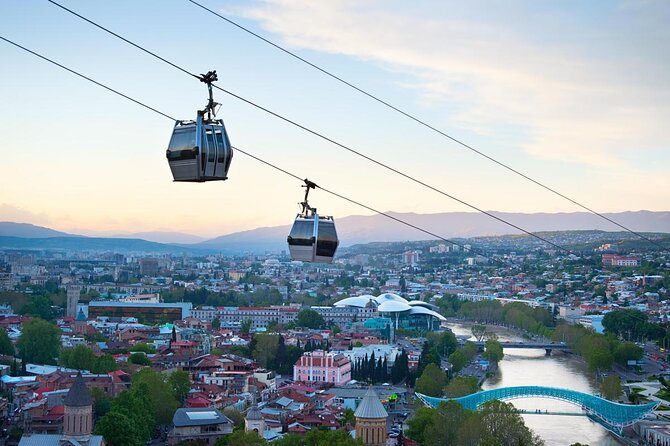
- Cable car included for the Narikala fortress area, tied to the walk’s timing
- Free admission at the listed sites, so you are not paying for entry fees all day
- Bottled water + local guide included, which helps on a 4-hour loop
- Meidan Bazaar stop gives you time for Georgian wine and classic market shopping
A 4-Hour Loop That Links Old Churches to Narikala Views

The tour is about 4 hours and is designed as one connected circuit of sights. You start in central Tbilisi and end near Orbeliani Bazaar, which is handy because you are not stuck returning to where you began.
At $27.24 per person, I see this as good value because you are paying for guidance and transportation support, not a stack of paid attractions. Bottled water is included, and every listed site has free admission noted, which matters in Georgia where many top sights are not necessarily expensive, but entry fees can still add up fast.
The route is also built around the kind of sightseeing that works for first-time visitors: short stops, clear explanations, and enough variety that you can tell what makes Tbilisi feel different from other capitals.
More wine tastings and cellar visits in Tbilisi:
- Tbilisi:Mtskheta,Jvari,Bazaar,wine tasting,Chronicles of Georgia
★ 5.0 · 730 reviews - Old Tbilisi Tour: Private Walking Tour With Wine Tasting
★ 5.0 · 273 reviews - Private Wine Tasting in Prince Karalashvili Wine Cellar. Tbilisi
★ 5.0 · 63 reviews
Pushkin Square Start, Orbeliani Bazaar Finish
You meet at Tbilisi Pushkin Square and finish at Площадь Орбелиани (near Orbeliani Bazaar). That finish point is useful because it is in a lively area where you can keep walking after the tour.
This tour also notes you are near public transportation, which is practical if you want to adjust your day. It uses a mobile ticket, so you are not hunting for paper documents.
If you are planning a tight itinerary, do not assume the walking pace is relaxed. The goal is to fit a lot into a 4-hour window, so come prepared to walk steadily and stand for photos.
Stop 1: Tbilisi Wall Ruins and 11th-Century Underground Heritage
The day opens at the Tbilisi city wall ruins, including Old customs gate remains tied to the 11th century. Even in a modern city, seeing fragments of fortification helps you understand why Tbilisi grew where it did and how the street layout likely followed earlier defensive lines.
You get about 15 minutes here, which is enough to see the main area and get the story without turning it into a long dig. Admission is listed as free, so this is one of those start-your-day stops where you do not lose time paying tickets.
Stop 2: Rezo Gabriadze Marionette Theater and the Hourly Golden Angel

Next is Rezo Gabriadze Marionette Theater on Shavteli Street. This is described as the first Georgian puppet theater in Tbilisi, built in 1981 by Rezo Gabriadze.
The standout detail is the clock tower created by Gabriadze in 2010. Once an hour, a golden angel comes out of the painted doorway and rings a bell with a small hammer. If you time it right, this turns into a memorable photo moment without needing to buy anything.
You get 15 minutes, so if you want to catch the angel, arrive a little early and keep your eyes on the doorway area when the guide says you are close to the hour.
More walking tours of Old Tbilisi:
- Tbilisi Walking Tour Including Cable Car and Traditional Bakery
★ 5.0 · 1,310 reviews - Tbilisi:Evening Walking & Talking Tour with Wine & Boat Ride
★ 5.0 · 572 reviews - Old Tbilisi Highlights walking tour with wine & 10 tastings
★ 5.0 · 276 reviews - Private Tbilisi Food Tour: 9 Tastings Walk in Bohemian District
★ 5.0 · 227 reviews
Stops 3 and 16: Anchiskhati Basilica and Sioni Cathedral
This tour hits two important church sites, and the explanations matter because they connect art, icons, and power.
At Anchiskhati Basilica, you are looking at a three-nave basilica dating back to the 6th century, described as the oldest church building in Tbilisi. The name also connects to an icon called the Savior of Anchi, which arrived from Anchi Monastery in South Georgia in 1664. The icon is described as an example of Georgian stamping, carved by Beka Opizari, and it is currently kept in the Georgian National Museum.
Later, you visit Sioni Cathedral Church, a cross-domed temple from the 5th century that has been in use to the present. It is described as the Patriarchal Cathedral since 1920. You get about 10 minutes, so treat it as a quick “read the building” stop, not a long worship visit.
What I like about including both is that you see different time layers of Georgian architecture in a single day, without needing to choose between them.
Stop 4: Patriarchate of Georgia on Erekle II Square

At Erekle II Square, you stop at the Patriarchate of Georgia area. The current building work began in 1809 on ruins tied to a former palace linked to Tsarist-era officials. After that, the site is described as becoming a center for the Russian Orthodox Church’s government in the region, including an Exarch and services.
This is only 10 minutes, and it is not a deep museum stop. Still, it helps you understand that Tbilisi’s religious and political influence is not just a medieval story, it has also been shaped by later eras.
Stop 5 to 8: Peace Bridge, Rike Park, King Vakhtang Monument, and Kartlis Deda

From the old-quarter feel, you shift to the Mtkvari river area.
The Bridge of Peace is a big photo and walk-through point. It connects Erekle II Street and Rike, and it was officially opened on May 6, 2010. The architect is listed as Michele de Luca, and the lighting designer as Philippe Martino.
You also get time at Rike Park, described as one of the newest major artistic parks in central Tbilisi. From above, it forms a large-scale map of Georgia, and the pathways are designed to depict various regions.
Then you pass the Monument of King Vakhtang Gorgasali, a statue tied to Vakhtang I Gorgasali of the Chosroid dynasty. The description notes dating his reign is complicated, but it also outlines his struggle against Sasanian Iranian hegemony, with an alliance to the Byzantine Empire.
Finally, you reach Kartlis Deda (Mother of Kartli), a symbol of Georgian national character. The statue is described as holding a wine glass in one hand for guests and a sword for enemies in the other. It is a quick stop, but it is a very Tbilisi way to mix symbolism and atmosphere.
Stop 9: The Cable Car Ride to Narikala Fortress

This is where the tour’s “cable car” promise becomes real. The Tbilisi aerial tramway connects Rike Park (Europe Square) to the fortress of Narikala, and admission for this segment is included.
The practical value is huge: you get an easy vertical connection between the river level and the fortress area. For a visitor, that saves time and avoids the guesswork of how to get up there on your own.
You get about 10 minutes for the cable car portion, so it is not meant as a standalone panoramic ride. Still, it is enough to get the point across and to arrive at Narikala with the walk’s energy still intact.
Stop 11: Narikala Fortress and the St. Nicolas Temple
At Narikala Fortress, you are in the historic Mtatsminda area. The fortress fragments are described as dating to the 4th century AD, with extensions in later periods. The description specifically notes Arab expansions in the 7th to 8th centuries, and it says the citadel in its modern condition is an example of Arabian fortification.
There is also St. Nicolas temple dated to the 12th century on the fortress territory. Your time here is about 20 minutes, which is enough to walk a main segment, get the layout, and take the skyline photos you came for.
Stop 12: Juma Mosque Below Narikala
Just below the fortress area is Tbilisi Mosque (Juma Mosque). The tour notes it is currently the only Muslim shrine in the city. The first Sunni mosque at this location was built 1723 to 1735 by the Ottomans, then destroyed by Persians in the 1740s.
Later, it was rebuilt 1846 to 1851 by architect Giovanni Scudieri, and then renovated significantly at the end of the 19th century in 1895 by Hajizinelabdin Tagiyev.
This stop has no ticket cost and lasts about 10 minutes. I like it because it breaks the usual “one religion per area” sightseeing pattern and shows how different communities shaped the same hillside and streets.
Stop 7: Metekhi Cathedral on the Left Bank
Back on the walk, you also visit Metekhi Cathedral in the Metekhi historical district on the left bank of the Mtkvari River. The tour highlights that the main sanctuary includes the tomb of St. Shushanik.
The description says Catholicos Kyrion transferred the remains to Metekhi after an ecclesiastical split between Armenians and Georgians in the early 7th century. It also notes Queen Tamar adorned the body of the Blessed Queen with gilded clothes and paid special homage.
You get about 15 minutes. This is one of the stops where the guide’s words really matter, because the significance is tied to specific people and events, not just architecture.
Stop 13: Leghvtakhevi Waterfall and the Old Gorge Setting
Next you see Leghvtakhevi Waterfall, described as being 22 meters tall. The name is tied to Georgian word “Leghvi,” meaning fig, and the description says many fig trees were around the area.
The tour also places it in a geography story: the ancient district Kala was separated from the main city by the Leghvtakhevi gorge. Even if you only see it from a viewing area, that context helps you picture why this spot became part of the city’s everyday flow.
This segment is about 10 minutes and free admission is noted.
Stop 13 to 14: Abanotubani Sulfur Baths and Chreli Abano
The tour then moves into Abanotubani, the ancient district known for its sulfur baths. It is located at the eastern bank of the Mtkvari River at the foot of Narikala.
The tour description explains that the baths were developed because of hot sulfuric springs. It also says the baths were built in different periods, roughly 17th to 19th centuries, with the oldest mentioned as the Irakli bath, which was part of arguments between the imperial family and Georgian princes in the 16th century.
You spend 30 minutes in this area, and the tour calls out Chreli Abano as a popular sulfur bath location. It notes Chreli Abano looks like a mosque, but it is a sulfur bath, and it is a fun place to visit.
This is the kind of stop where you can slow down a bit, watch the crowd flow, and get a feel for local routines in a historic quarter. Just remember the tour is still keeping to a schedule, so you will want to choose your “photo spot” quickly and let the group keep moving.
Stop 14 and 15: Meidan Bazaar Wine Time and Shardeni Street Stroll
After the baths area, you head into shopping and social streets.
At Meidan Bazaar, the tour notes French traveler Jean Sharden mentioned it in the 18th century. It also lists older names for the square, including Shaitan Bazaar, Tatris Moedani, and Tsikhis Moedani. This stop is about 20 minutes, and it is geared for buying things: traditional Georgian wine, handmade accessories, souvenirs, and delicacies.
This is also where the tour’s “wine tasting” theme fits best. Since the schedule gives you time right in the bazaar, you are positioned to try or sample something local without needing to hunt for it later.
Then you walk to Jan Shardeni Street (named for Jean Chardin after a XIX-century reconstruction). The tour describes it as a pedestrian street that helped shape the city’s cultural and social life. It also says the street, plus nearby pedestrian lanes, is lined with galleries and cafes.
This is about 10 minutes, so treat it as a short flavor stop, then decide if you want to continue on your own after the tour ends.
Stop 8 and 10: Short Moments That Add Symbolic Meaning
A few stops are brief, but they help connect Tbilisi’s story to a bigger idea of identity.
The Monument of King Vakhtang Gorgasali is only 5 minutes, but it is packed with political detail in the guide’s framing, including his alliance with the Byzantine Empire and conflicts tied to Sasanian Iranian hegemony.
Kartlis Deda is about 10 minutes, and its two-handed message, wine glass for guests and sword for enemies, is the sort of symbolism that stays with you after you leave. If you like cities where public art is not just decoration, you will probably enjoy this part.
What You Actually Get Included, and Why It Matters
Included in the tour:
- Bottled water
- Local guide
- Cable car segment (aerial tramway to Narikala)
Not included:
- Food and drinks
- Hotel pickup and drop-off is listed as not included, even though hotel pickup is described as available in the highlights. That means you should confirm what is included for your exact booking before you count on it.
A key value point is that the tour lists free admission for every major stop shown, from the wall ruins to churches, bridges, the theater, and fortress areas. That reduces friction for you on the day and keeps spending focused on what you choose, like wine at Meidan Bazaar or small souvenirs on Shardeni Street.
How to Time This Tour for Best Enjoyment
A small tip: with a route like this, you benefit from arriving on time and paying attention when the guide mentions timing-sensitive moments. The puppet theater has a golden angel that appears once an hour, so your exact minutes matter there.
Also, the tour is booked on average about 14 days in advance, which suggests it is popular. If you want a specific date, book earlier rather than waiting for last-minute flexibility.
Finally, plan your day so you are not immediately rushing off after the finish at Orbeliani Bazaar. You end in a good area for continuing on foot, and it is easier when you are not dragging luggage or scrambling for transit.
Should You Book This Friendly Tbilisi Walking Tour?
I would book it if you want a high-efficiency Tbilisi introduction with a guide, free-entry stops, and an included cable car ride. It is a solid match for first-timers who like architecture, symbols, and short, well-explained segments rather than long museum marathons.
I would think twice if you prefer slow pacing, deep time inside religious buildings, or long stays in a single neighborhood. The tour is built for movement, so you get a taste of many places in one day.
One more good sign: Fellini Travels guide Anastasia de Fellini has been praised as very friendly and close in her approach, with a genuine love for what she does. If that style appeals to you, this tour’s tone is likely to land well.
FAQ
How long is the Very Friendly Tbilisi Walking Tour?
It runs for about 4 hours.
How much does the tour cost?
The price is $27.24 per person.
What is the group size?
It is a small-group tour with a maximum of 15 people.
Is the cable car included?
Yes, the aerial tramway/cable car segment is included.
Are entrance tickets required for the stops?
The listed admission tickets for the stops are marked as free.
What is included in the price besides the tour guide?
Bottled water is included, and the local guide is included.
What is not included?
Food and drinks are not included, and hotel pickup and drop-off are listed as not included.
Where do I meet the tour?
The start is at Tbilisi Pushkin Square.
Can kids join?
Children must be accompanied by an adult.
Are service animals allowed?
Yes, service animals are allowed.
Is it free to cancel?
Cancellation is free, and you can cancel up to 24 hours in advance for a full refund.
More Wine Tours around Tbilisi
- Day Trip to Kakheti Wine Region Including 9 Wine Tastings
★ 5.0 · 2,774 reviews - Kakheti Wine Region: Signagi and Bodbe Tour with 10 Wine Tastings
★ 5.0 · 1,019 reviews - Kakheti;City of Love Sighnaghi, Bodbe. KTW. Wine House Group tour
★ 5.0 · 376 reviews - Kakheti: Bodbe, Sighnaghi, Telavi Wine Tour from Tbilisi
★ 5.0 · 307 reviews
More Food and Drink around Tbilisi
- Tbilisi Food Tour in a Local Family
★ 5.0 · 113 reviews - Private Tour From Tbilisi to Kakheti Sighnaghi with Wine Tasting
★ 5.0 · 35 reviews - Adventure in Kakheti – Bodbe, Sighnaghi, wine tasting (Private Experience)
★ 5.0 · 29 reviews - Highlights of Kakheti region-Signagi,Bodbe,Wine tasting(Private Tour)
★ 5.0 · 28 reviews
Recently added around Tbilisi
- Private Adorable City Tour of Tbilisi★ 5.0 · 3 reviews
- Old tbilisi walking tour & wine tasting★ 5.0 · 9 reviews
- Tbilisi Airport to Gudauri, Bakuriani, Batumi, Tbilisi★ 5.0 · 3 reviews
- full day Kazbegi-Gudauri-jvari -from Tbilisi★ 5.0 · 6 reviews
- Vardzia. Lake Paravani, Khertvisi & Lomisa castle, Rabati★ 4.5 · 12 reviews
- Your unique photo session in Tblisi, Georgia★ 3.5 · 4 reviews
- Wine Tasting in Tbilisi★ 5.0 · 8 reviews
- Wine promenade in hospitable Tbilisi★ 5.0 · 17 reviews
Old Tbilisi Walking Tours, compared.

Tbilisi Walking Tour Including Cable Car and Traditional Bakery
Read our review →
Evening Walking & Talking Tour with Wine & Boat Ride
Read our review →
Old Tbilisi Highlights walking tour with wine & 10 tastings
Read our review →
Old Tbilisi Tour: Private Walking Tour With Wine Tasting
Read our review →
Private Tbilisi Food Tour: 9 Tastings Walk in Bohemian District
Read our review →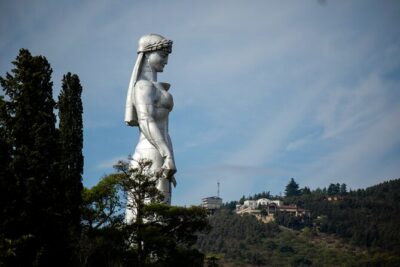
Tbilisi Old Town Walking Tour with a Local Guide
Read our review →
Discover Tbilisi: Hidden Gems and Iconic Sights Walking Tour
Read our review →
Tbilisi old town & soviet heritage – Private driver-guided Tour
Read our review →Browse the lists this tour appears in