
Reviewed · TUSHETI & KHEVSURETI WILDERNESS TRIPS
Trekking Tour from Tusheti to Khevsureti via Atsunta Pass
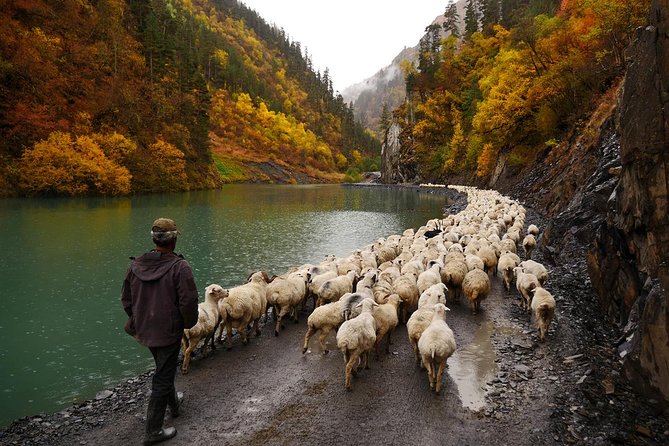
This trek is interesting because it mixes remote mountain roads with days of real wilderness travel. You start in Tusheti’s stone villages, then walk into a silent high-country zone where you are basically hiking by yourself, with your group. I love that it climaxes at Atsunta Pass (3431 m) with huge views, and then drops you into Khevsureti’s dramatic defensive villages.
Two things I especially like about it: the route is built around medieval stone settlements like Dartlo, Kvavlo, Girevi, Mutso, and Shatili, and the wilderness section feels properly unplugged. In the past, guides such as Tato, Dito, and Dimitri have been praised for making the trek feel both organized and personal, with good local knowledge.
One possible drawback: you need to be ready for sustained uphill hiking and a total of about 72 km on the trail over 6 days. If you hate camping or you want constant comforts like warm showers, this one may test you.
Key things to know before you go
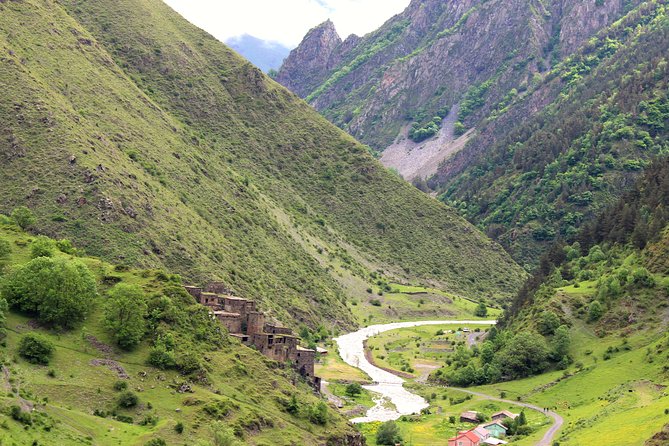
- Atsunta Pass at 3431 m is the high point, with a real day of climbing and panoramic breaks
- No huts, no villages for stretches during the wilderness days, so you camp with your group
- Tusheti village days include stone towers and defensive architecture, not just scenery
- Mutso and Shatili deliver the most dramatic Khevsureti fort-village feel, perched above gorges
- A small max group size (15) helps keep the pace steady and the experience intimate
- Luggage help is built in with horses for luggage transportation, so you can pack lighter
Why this Tusheti to Khevsureti route feels so different
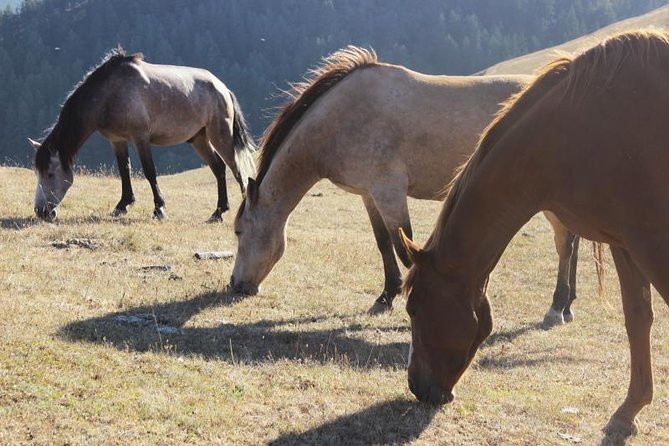
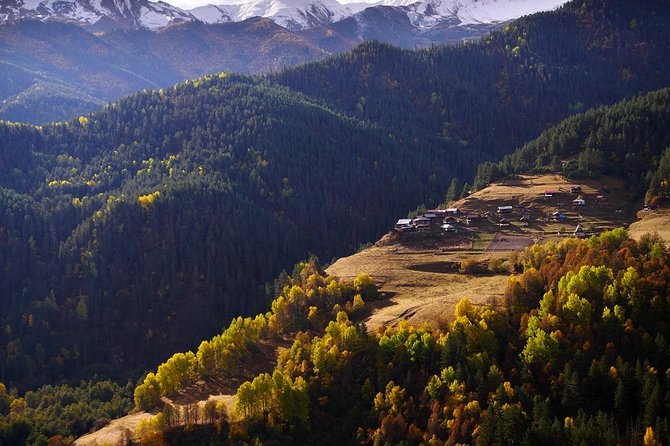
This is not a “pretty hike to a viewpoint and back” kind of trip. It is a point-to-point mountain journey across the Greater Caucasus, switching from village walking to high-country wandering. You will go from alpine meadows and snow-covered peaks (weather dependent) to stone towers on rocky ridges in Khevsureti.
The Atsunta corridor is the heart of it. When you reach the pass, you get the feeling that the trail has thinned out into pure mountain country. Then the descent becomes its own kind of reward, because Khevsureti’s settlements feel like they were designed to be seen from far away, on purpose.
I also like that the trip includes both culture and logistics. You are not left to figure things out in the field. The plan includes transfers, meals, basic camping equipment, and guide leadership throughout.
More Tusheti and Khevsureti trips:
- 3 Day Tusheti Tour Explore Unspoiled Wilderness
★ 5.0 · 28 reviews - day trip to Shatili, Khevsureti, Mutso, Ananuri.
★ 5.0 · 21 reviews - Five days tour to Khevsureti (Abudelauri lakes) & Kazbegi with hikes.
★ 5.0 · 14 reviews
Price and what $1,620 is really buying you
At $1,620 per person for 6 days, you should evaluate value in terms of what’s bundled, not just the daily rate.
Here’s what you get for that price:
- Expert guide leadership for the full 6 days
- 4WD transfers from Tbilisi to Alavani, then onward to Omalo
- Road transfer at the end from Mutso to Shatili, then to Tbilisi
- Fuel surcharge and the required logistics to run a route in remote terrain
- Lodging nights in guesthouses in Omalo, Dartlo, Girevi, and Shatili
- Camping basic equipment like tents, sleeping bags, and sleeping mats
- Horses for luggage transportation
- Meals: breakfast (5), lunch (6), and dinner (6)
What’s not included is also important: drinks, your last night in Tbilisi, and trekking gear like a backpack and trekking poles. If you compare with other treks where those items are extra, you can see why this package can feel fair, especially given the remoteness of Tusheti.
My practical take: if you show up fit and travel light, the included equipment and meals reduce your hassle a lot. The biggest “hidden cost” tends to be your own gear and any drinks, not the trek itself.
The fitness reality: 72 km, altitude, and a serious pace
The tour calls for a strong physical fitness level, and the numbers back that up. There is about 72 km of walking total across 6 days. You also hit high elevations: a pass while driving at 2850 m, plus Atsunta Pass at about 3400 m, with a stated high point at 3431 m.
Even if you hike regularly, treat this as endurance trekking, not a casual day hike. The route includes steep sections and narrow paths, and you should expect long days even when the total distance isn’t extreme.
Good news: the plan spreads the effort with village days, camping days, and downhill segments. Also, the group size is capped at 15, which helps avoid the stampede effect where slower hikers fall behind.
Day-by-day: Tusheti stone villages to the quiet gorge trails
Your trip starts with a mountain drive and immediate atmosphere. You meet at 9:00 am at the Giant Bicycle monument in Rose Revolution Square, Tbilisi. Then you transfer by 4WD toward the Kakheti region and through passes, reaching Omalo after about 6 hours of driving.
More hiking and trekking day trips:
- David Gareji and Real Rainbow Mountains Off-Road adventure + hike
★ 5.0 · 129 reviews - 8-Day Trekking Group Tour in Svaneti
★ 5.0 · 21 reviews - Kazbegi Tour with Gergeti Church, Waterfall Hike & Hidden Gems
★ 5.0 · 19 reviews - 3-Day Hiking Group Tour in Kazbegi
★ 5.0 · 14 reviews
Omalo and Keselo Towers: the entry into Tusheti
On your first day, you do a light explore of Omalo and Keselo Towers. This is the adjustment day, useful because you will be walking more soon. The elevated driving pass at 2850 m also helps you feel the altitude before you commit to longer trail days.
You are not just arriving at a scenic village. Tusheti’s stone architecture is the story here. Towers and defensive features were built for survival in a rugged region.
Dartlo and Kvavlo: medieval stone, river valleys, and real uphill walking
The second day starts with a hike into the village of Dartlo in the Pirikiti Tusheti valley. Dartlo has recently been renovated, and it is a classic Tusheti-style set of stone buildings with defensive structures.
From Dartlo, the plan continues to Kvavlo, a place known for ruined towers and houses overlooking the Alazani river and surrounding mountains. This is where you get that mix of living village remnants and historic defenses.
This day has a specific workout: one-way walking is around 3.2 km, with an ascent of about 400 m, and roughly 2 hours one way. In plain terms, it is short enough to be manageable, but steep enough to get your legs working.
Parsma and Girevi: narrow paths and gorge walking
Day three keeps you moving upstream along the Pirikiti Alazani river. You visit villages including Chesho and Parma(Parma/Parsbma as spelled in materials), with stone towers and notable houses.
Then you transition to narrower walking paths. The target is Girevi, reached through trail segments above the river gorge. This day feels less like “village sightseeing” and more like hiking through Tusheti’s geography, with villages as stepping stones.
The camping transition near Girevi: feeling the wilderness begin
Day four is where the trip changes flavor. After breakfast, you start the most difficult part of the trek, moving along the narrow gorge above Girevi. You cross small mountainous rivers, pass a ruined village called Chontio, and stop near Kvakhidi.
This is an open green-fields area in alpine meadows and rocky terrain. You set up tents and have dinner. That moment matters: this is your shift from village infrastructure into mountain self-sufficiency, with only hikers and your guide team around.
Crossing Atsunta Pass at 3431 m: the hardest day, with the best payoff
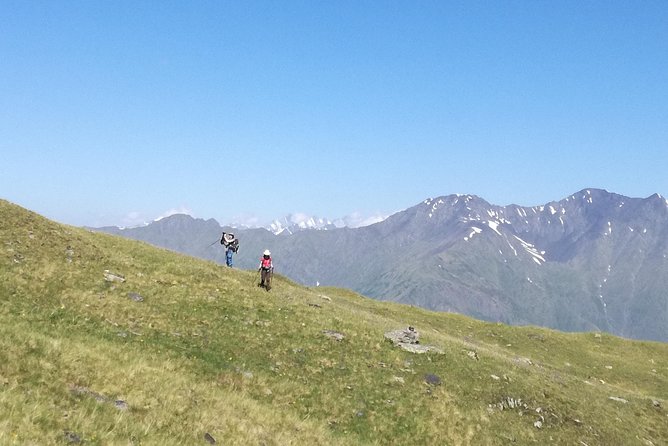
Day five is the top-of-the-trek effort. You hike up to Atsunta Pass, reaching about 3431 m. You stop for snacks and take in panoramic views of the alpine meadows and surrounding mountains.
In this kind of altitude day, the biggest win is mental, not just physical. You do not have to rush. You just keep steady, breathe, and accept that the climb is slower at height.
After the pass break, you descend toward the Khidotani ridge and camp again in an open alpine meadow. This part is not just “coming down.” It’s where the terrain opens up and you feel the expanse of the Caucasus.
If you time it right, you might also notice wildflowers. Past departures have specifically been praised for an abundance of wildflowers during these high-country sections.
Into Khevsureti: Mutso’s fortress geometry and Shatili’s tower cluster
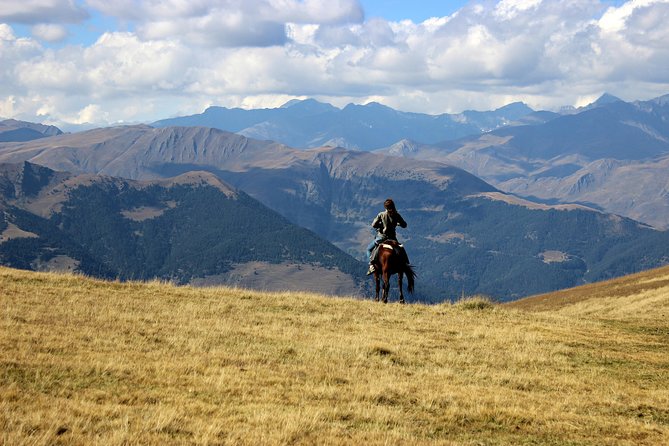
When you reach Khevsureti, the walking gets easier in places, and the route begins to follow a car road for several kilometers. That shift helps you absorb what you have done and start enjoying the villages more.
Shifting from gorge trail to first Khevsureti settlement
Day six begins with breakfast in the mountains, then hiking down into a narrow gorge. You reach Kh(on)e (spelled Khone in materials) as the first inhabitant place in Khevsureti.
You then walk to Mutso. Mutso is now largely abandoned, but the surrounding scenery and tower-and-architecture style still impress. A Mutso fortress complex has been renovated, and you can take a detour to hike about 2 km to the fortress.
Mutso to Shatili: defensive villages with big views
Near Mutso, transport meets you. From there, you drive to Shatili, then onward to Tbilisi.
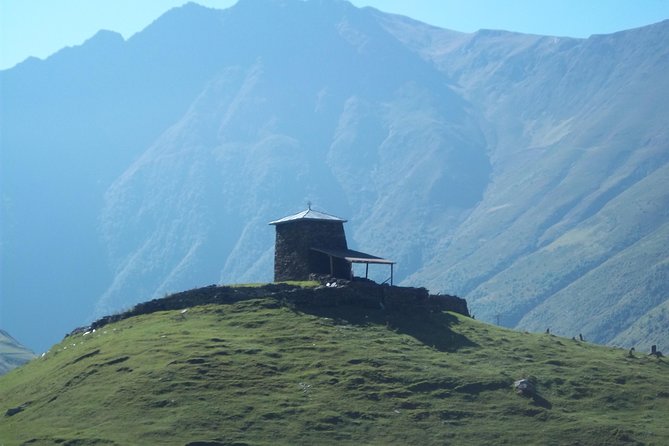
Shatili is known for stone towers and defensive medieval complexes perched on rocky heights with views over narrow gorges. It is the kind of place where you can look around and understand why towers were built where they were built. The village design is a response to steep terrain and strategic visibility.
Lodging, food, and the camping comfort level
This trek blends guesthouse nights with camping nights, so your comfort depends on how you handle basic mountain living.
You will have:
- One night in a guesthouse in Omalo with private facilities
- One night each in Dartlo and Girevi guesthouses with shared facilities
- One night in Shatili guesthouse with shared facilities
- Two camping nights during the wilderness part, using provided basic equipment (tents, sleeping bags, sleeping mats)
Meals are included throughout: breakfast on 5 mornings, lunch 6 times, dinner 6 times. Based on guide-led treks of this type, the guesthouse food is often simple but substantial, and past reviews have praised the taste and the local guesthouse vibe.
Drinks are not included, so plan on bringing or buying water and extras as available. Your day-to-day energy will depend on hydration, especially at altitude.
Transport, luggage, and what to pack for this kind of trek
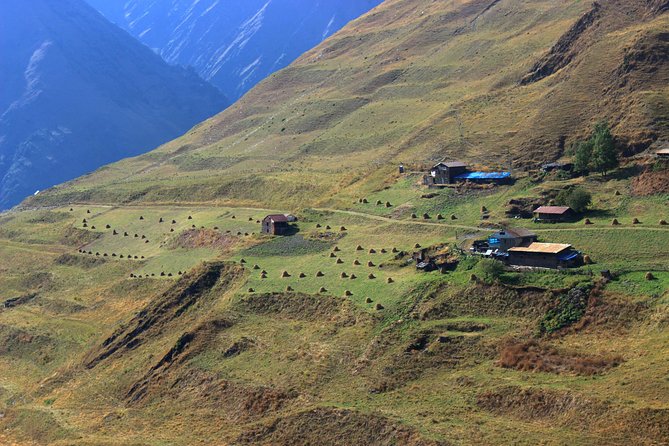
You should expect real logistical work in a remote region, but the tour handles most of it.
Key transportation points:
- 4WD transfer from Tbilisi to Alavani, then to Omalo
- Road transfer from Mutso to Shatili to Tbilisi at the end
- Horses for luggage transportation, so you can keep your day pack focused on what you need right then
Luggage rules matter:
- You are allowed 1 suitcase and 1 carry-on bag
- Oversized or excessive items may be restricted
What to bring:
- A backpack and trekking poles are not included
- Passport is required on the day of travel, and you must provide passport details at booking
Pack for cooler high-altitude conditions and for damp, rocky terrain. Even in good weather, this kind of mountain environment can shift quickly.
Guides and group size: what “small” changes in your experience
This trek runs with a maximum of 15 travelers, which is a big deal in mountain logistics. It keeps trail groups manageable when paths narrow near gorges and when you set up camp.
Guide quality is also a recurring theme in feedback. Names you may see associated with successful departures include Tato, Dito, Dimitri, Nutsa, and Misha. Across those stories, people praised the guides for organization, local insight, and making the trek feel meaningful rather than just procedural.
For you, that means fewer awkward moments where you are unsure what is next. It also means someone is reading the route and terrain so you can focus on walking and taking in the places you came for.
Who should book this trek, and who should skip it
This trek is a great fit if you:
- Want an active mountain journey with a real wilderness section
- Like medieval stone villages and want to see how communities were built into steep terrain
- Are comfortable camping at least twice and using provided basic equipment
- Have strong hiking stamina for long days and altitude
You might skip it if you:
- Want guaranteed modern comfort every night
- Are sensitive to altitude or not ready for sustained climbing
- Prefer short hikes with frequent village access and rest stops
The best part is how it balances village culture with wilderness solitude. If you want both, this route delivers.
Should you book the Tusheti to Khevsureti trekking tour via Atsunta Pass?
Book it if you want a high-value trek that includes guides, transfers, lodging, meals, camping gear, and luggage horse support, while still giving you the kind of remote mountain feeling you rarely get on fully day-hike itineraries.
I would hesitate if you are only “okay” at hiking or if you are expecting hut-to-hut comfort. The wilderness days are real, and the altitude pass is not a casual photo stop.
If you’re fit, curious about stone villages like Dartlo, Girevi, Mutso, and Shatili, and ready for a tough but rewarding day at Atsunta Pass, this is the kind of Georgia trek that stays with you.
FAQ
Where do I meet, and what time does the trek start?
You meet at 9:00 am at the Giant Bicycle monument in Rose Revolution Square, Tbilisi, Georgia.
How long is the trekking tour?
The tour is about 6 days.
How much walking is involved?
There is about 72 km of walking during the tour.
What is the highest point you reach?
You reach Atsunta Pass at about 3431 m.
Do I camp during the trek?
Yes. You camp for at least two nights in alpine meadows after setting up tents near Kvakhidi and near the Khidotani ridge.
What kind of lodging is included?
The tour includes guesthouse nights in Omalo (private facilities), Dartlo (shared facilities), Girevi (shared facilities), and Shatili (shared facilities), plus camping nights during the wilderness part.
Are meals included?
Yes. Breakfast is included for 5 mornings, lunch for 6 days, and dinner for 6 days.
What transfers are included?
A 4WD transfer is included from Tbilisi to Alavani, then to Omalo. At the end, transportation is included from Mutso to Shatili and then to Tbilisi.
What trekking gear should I bring?
Trekking gear like your backpack and trekking poles is not included, so you should bring those.
Do I need a passport?
Yes. You need a current valid passport on the day of travel, and your passport details are required at booking.
Recently added around Tbilisi
- Private Adorable City Tour of Tbilisi★ 5.0 · 3 reviews
- Old tbilisi walking tour & wine tasting★ 5.0 · 9 reviews
- Tbilisi Airport to Gudauri, Bakuriani, Batumi, Tbilisi★ 5.0 · 3 reviews
- full day Kazbegi-Gudauri-jvari -from Tbilisi★ 5.0 · 6 reviews
- Vardzia. Lake Paravani, Khertvisi & Lomisa castle, Rabati★ 4.5 · 12 reviews
- Your unique photo session in Tblisi, Georgia★ 3.5 · 4 reviews
- Wine Tasting in Tbilisi★ 5.0 · 8 reviews
- Wine promenade in hospitable Tbilisi★ 5.0 · 17 reviews
Tusheti & Khevsureti Wilderness Trips, compared.
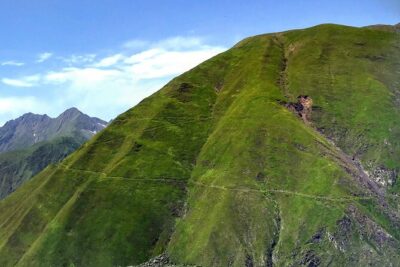
3 Day Tusheti Tour Explore Unspoiled Wilderness
Read our review →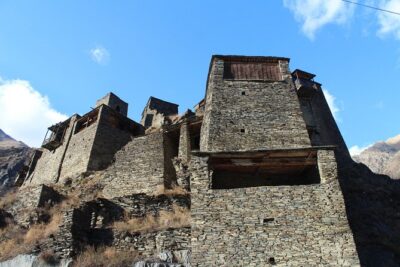
day trip to Shatili, Khevsureti, Mutso, Ananuri.
Read our review →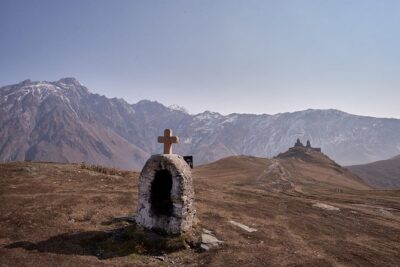
Five days tour to Khevsureti (Abudelauri lakes) & Kazbegi with hikes.
Read our review →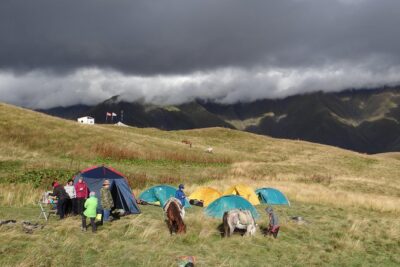
7-day hiking expedition to Tusheti through the Atsunta pass
Read our review →Browse the lists this tour appears in