
Reviewed · GEORGIAN COOKING CLASSES
Nana’s Kitchen – traditional Georgian cooking class at real Georgian family home
What makes Nana’s Kitchen so interesting is that it turns Georgian hosting culture, Supra, into a real evening inside a family home, not a lecture and not a staged show. I love how warmly Nana and Nina guide you step by step, and I love that you finish by sitting down to a traditional Supra-style dinner made from what you cooked. One consideration: this is a fixed evening class, so if you want daytime sightseeing, plan your Tbilisi schedule around a later start.
The setup also feels intimate. You cook at your own pace with support, you learn why ingredients and dishes matter, and you leave with a recipe booklet so you can recreate the dishes at home. It is a great choice for people who want Georgian food culture up close, with real people doing real cooking.
Quick hits before you go
Cook five dishes in one evening, guided from the kitchen itself
Start with Georgian homemade wine from the family vineyards
Learn Supra hosting traditions, not just how to plate food
Dishes focus on classic flavors like walnuts, herbs, and spice mixes
Take home recipes in a booklet, so you can cook it again later
Small group feel, with plenty of conversation and a relaxed pace
Why Supra culture is the real star of this cooking class
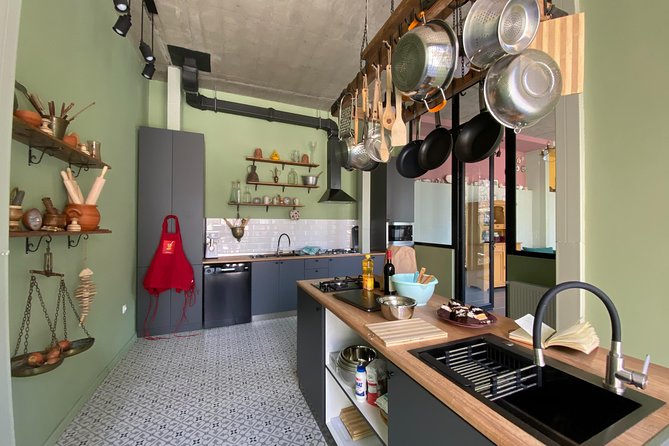
This class is not only about recipes. It is about the Georgian way of hosting, eating, and celebrating. Supra is the traditional feast framework where good food and good wine go together, and the hosting spirit is part of the meal. Instead of talking about it from a distance, you learn the meaning, then you cook dishes that belong in that kind of table.
That changes the whole experience. When you understand what a Supra represents, the recipes stop feeling like random items you ordered off a menu. They become pieces of a hosting ritual. You can even imagine the meal later at home: someone gathers friends, food lands on the table, and the dishes you made carry context.
The vibe is also very personal. Nana and her family work like homemakers, and the energy is friendly and patient. In practice, that means you are not afraid of messing up dough texture on a paste, seasoning too light, or cutting something the wrong size. You get corrections in a calm way, with explanations that make the steps click.
More Georgian cooking classes:
- Small-Group Khinkali and Khachapuri Cooking Class in Tbilisi
★ 4.5 · 224 reviews - Cook True Ajarian Khachapuri and Khinkali in Highlanders Style
★ 5.0 · 93 reviews - Maia and Nina’s Magic Kitchen
★ 5.0 · 49 reviews
Meeting at 26 Guram Rcheulishvili St for an evening that runs late
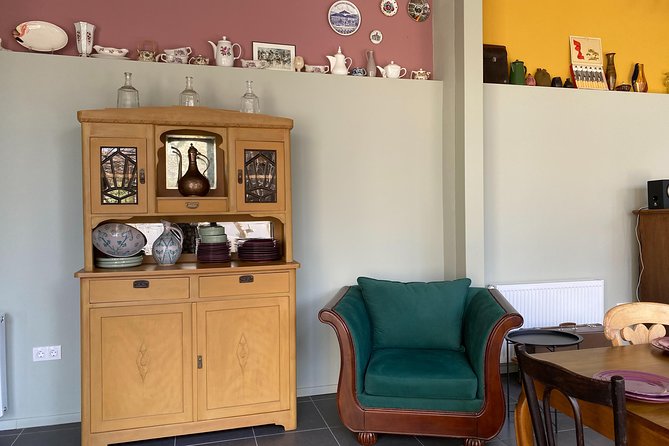
The meeting point is 26 Guram Rcheulishvili St, Tbilisi 0179, Georgia. The class takes about 3 hours, and it runs in the evenings, with opening hours listed as Monday to Friday, 7:00 PM to 11:00 PM. You start and end back at the same meeting point.
This timing matters. You are stepping into a late-day rhythm where dinner culture is already in motion. If you like evenings that feel social and cozy, you will love it. If you prefer to eat early and be done by 7:00 PM, you may find the schedule tight.
Good news for getting there: the activity is noted as near public transportation, and it is a private tour/activity, meaning only your group participates. The English offering is also clear, so you are not stuck playing food charades.
Wine first, then a quick on-ramp to Georgian cuisine
You begin with a glass of Georgian homemade wine. It comes from the family vineyards, which adds a nice layer of pride and context. Before you start chopping, Nana’s team also gives a short introduction on what Supra means, plus background on the origins of Georgian cuisine and key influences.
That intro is not fluff. It helps you understand why some flavors show up again and again. Georgian cooking often leans on herbs, walnuts, and spice blends, and the class frames those choices as part of a broader culinary identity rather than just technique.
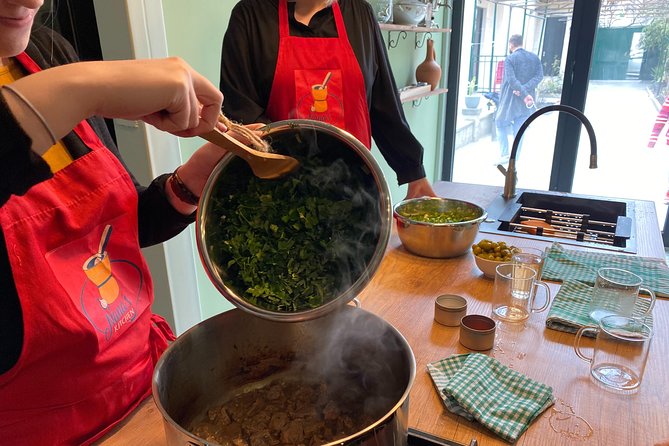
Then you move into the kitchen. Rolling up sleeves is the point here. You are not watching someone else do the whole thing. Based on the way the class is described, you will be making dishes yourself with guidance and demonstrations, which is what turns it into real learning.
The hands-on cooking: five dishes with a Supra-friendly lineup
The class teaches you how to make five Georgian dishes. The exact menu includes a starter, multiple mains, and a seasonal main choice. You also get to choose options for at least one part of the menu, which helps if you are picky about meat or prefer a specific dish.
Here is what to expect from the sample menu.
More workshops and classes around Tbilisi:
- Taste of Kakheti: Wine Tour Bread Baking & Churchkhela Workshop
★ 4.5 · 46 reviews - Join a Local for a Market Tour, Cooking Class and Meal in her Tbilisi Home
★ 5.0 · 15 reviews - Georgian Dance Class in Tbilisi, Georgia
★ 5.0 · 10 reviews - Taste of Georgia. Cooking-Class Khinkali, Khachapuri and more
★ 5.0 · 7 reviews
Starter: Traditional Spinach Paste
You start with a traditional spinach paste. In practice, this is a great first dish because it teaches fundamentals you will use later: balancing salt, getting the texture right, and understanding how herbs or seasonings bring the spinach to life.
This is also a good warm-up mentally. If you are nervous about cooking in a new style, a paste can feel manageable. You work with familiar ingredients, then you learn how Georgian seasoning logic makes it taste distinctly Georgian.
Main: Red Peppers with Walnut and Spice Mix
Next comes red peppers with a traditional walnut and spice mix. This pairing is one of those Georgian signatures that you will probably think about later at your own kitchen table. Walnuts add body, and spice blends add that warm, aromatic edge.
This dish is also a lesson in pairing. The flavors should feel intentional together, not like separate components. You will learn how the walnut-spice mix functions as a sauce-like element, rather than only a topping.
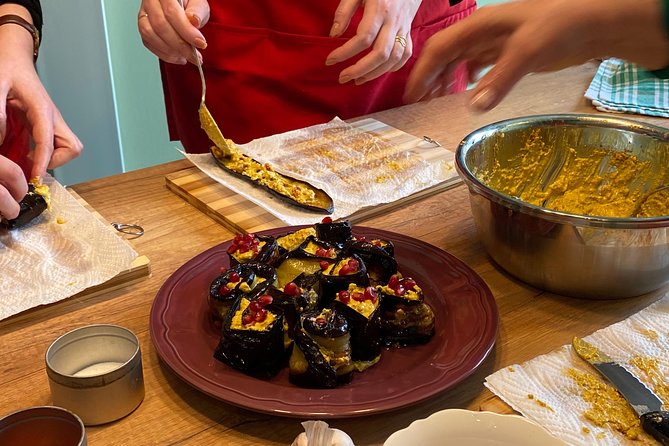
Main: Fried Eggplants with Walnuts
Then you get fried eggplants with walnuts. Fried eggplant has a built-in comfort factor, but Georgian versions lean on the walnuts and seasoning to turn it from simple comfort into a feast-worthy plate.
For you, the value here is practical. Eggplant can go soggy if the process is off, or it can taste flat if the seasoning does not pull it together. This kind of class instruction helps you understand timing and how the flavors should land.
Main choice: Chakapuli or Chakhokhbili
For the seasonal main, you have options: Chakapuli (veal with tarragon) depending on the season, or Chakhokhbili. Both are classic Georgian directions, and the choice lets you match the dish to your preferences.
Chakapuli is described as veal with tarragon, which signals an herb-forward, aromatic profile. If you pick the eggplant-and-walnut dishes and want something that feels greener and more fragrant, this is the one to aim for.
Chakhokhbili is offered as the alternative. The class does not list more detail than that here, but it does make the key point: you are learning two types of mains within the Georgian feast style, so you can recreate a more complete table later.
What you learn besides the recipes: ingredient stories and hosting logic
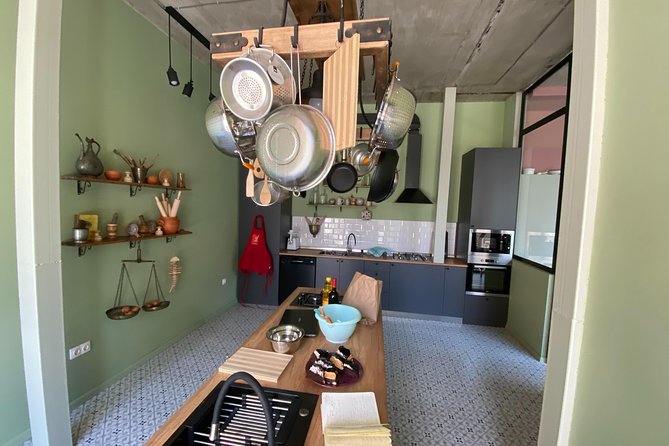
A standout theme in the experience is how much context you get while you cook. Nana’s team explains the meaning behind dishes and ingredients, including where certain dishes originated and the story attached to what is on the plate.
That matters if you cook at home. Anyone can follow a recipe written in ingredients and grams. But if you understand why Georgian cooks lean on walnuts, herbs, and spice mixes, you can adjust later without ruining the character of the dish.
And because the class is built around Supra, you also pick up the logic of Georgian dining as a shared celebration. You learn how a feast is paced and how the table works as a social event where everyone eats together.
In other words, you are not just collecting techniques. You are getting a mental model for Georgian meals.
The Supra-style dinner: you eat like you host
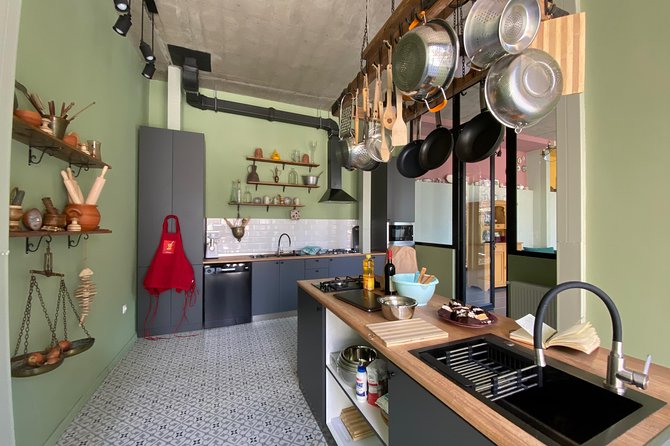
After cooking, the evening ends with a dinner conducted in a traditional manner of Supra. You sit down and enjoy what you made, as part of that feast framework.
This is one of the best parts because it closes the loop. The kitchen work is fun, but dinner is where the flavors land and where you feel the purpose of the cooking session.
If you care about authenticity, this matters. A Supra-style dinner is designed to feel like a celebration meal, not a quick tasting. It helps you see how the dishes belong together on the same table, and it gives you a clearer sense of what to serve as a set when you try to recreate it later.
What you take home: recipe booklet for your Georgian party
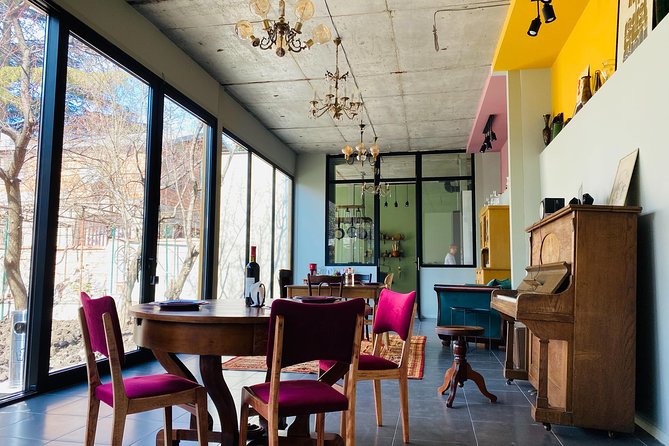
At the end of the course, you receive a booklet with recipes of all the dishes you made. This is the part you will use most once you get home. It turns the class from a fun memory into a repeatable skill set.
The class also gives you a clear roadmap for recreating a Georgian party. The structure is built so you can host friends with a menu that makes sense as a Supra-inspired feast.
In some cases, people may also leave with extra helpful cooking items like starter spices or take-home portions of food. Since that is not guaranteed in the basic info, treat it as a nice bonus if it happens, not something you should plan around.
Value check: is $110 for 3 hours a good deal?
At $110 per person for about 3 hours, this is not a bargain cooking class. But you also are not paying for a big group, a quick snack, or a generic demo.
You are paying for a few concrete things:
- Access to a real Georgian family home, with a small-group, intimate feel
- Hands-on cooking where you make multiple dishes yourself
- A glass of homemade wine from the family vineyards to start the evening
- A Supra-style dinner that uses the food you cooked
- A recipe booklet so the experience keeps paying off after you leave Tbilisi
If your goal is to leave with both taste and technique, the price starts to make sense. If your goal is only photos and street food, you might feel it is pricey because it is focused and evening-bound.
The best way to judge value for yourself: if you would pay extra to cook with real hosts and eat in a true feast format, this is a strong match. If you only want something light and casual, you can probably find cheaper food experiences.
Who should book Nana’s Kitchen, and who might not love it
This class fits you if:
- You want practical cooking skills you can repeat at home
- You care about Georgian culture through food, especially the meaning of Supra
- You like small-group conversations and a homey atmosphere
- You are traveling as a couple or with family and want an activity that feels personal
You might skip it if:
- You are set on daytime plans in Tbilisi, because this is scheduled for the evening window
- You only want a quick bite experience, since this is a hands-on cooking plus dinner format
Also, note the language setup: the class is offered in English, so you can follow the instruction without guessing. And service animals are allowed.
Should you book Nana’s Kitchen?
Yes, I would book it if you want an authentic Georgian food evening that actually teaches you something. The combination is hard to beat: wine first, then five dishes you cook yourself, then a Supra-style dinner, and you leave with a recipe booklet.
If you only have one evening free in Tbilisi, this is a smart use of it. Food is not just food here, it is culture you can taste and recreate.
If your trip has a tight schedule and you hate late starts, then you need to weigh your priorities. But for most people looking for a real Georgian home experience, this one is a solid plan.
FAQ
How long is Nana’s Kitchen?
The class runs for about 3 hours.
What does the class include?
You cook five Georgian dishes with guidance, start with a glass of Georgian homemade wine, and finish with a traditional Supra-style dinner. You also receive a recipe booklet.
What time does it run in Tbilisi?
Opening hours are listed as Monday to Friday, 7:00 PM to 11:00 PM, and the activity ends back at the meeting point.
Where do I meet for the class?
Meet at 26 Guram Rcheulishvili St, T’bilisi 0179, Georgia.
Is it offered in English?
Yes, the class is offered in English.
Is this a private experience?
Yes. Only your group participates.
Can I get a refund if my plans change?
This experience is non-refundable and cannot be changed for any reason.
Recently added around Tbilisi
- Private Adorable City Tour of Tbilisi★ 5.0 · 3 reviews
- Old tbilisi walking tour & wine tasting★ 5.0 · 9 reviews
- Tbilisi Airport to Gudauri, Bakuriani, Batumi, Tbilisi★ 5.0 · 3 reviews
- full day Kazbegi-Gudauri-jvari -from Tbilisi★ 5.0 · 6 reviews
- Vardzia. Lake Paravani, Khertvisi & Lomisa castle, Rabati★ 4.5 · 12 reviews
- Your unique photo session in Tblisi, Georgia★ 3.5 · 4 reviews
- Wine Tasting in Tbilisi★ 5.0 · 8 reviews
- Wine promenade in hospitable Tbilisi★ 5.0 · 17 reviews
Georgian Cooking Classes, compared.

Small-Group Khinkali and Khachapuri Cooking Class in Tbilisi
Read our review →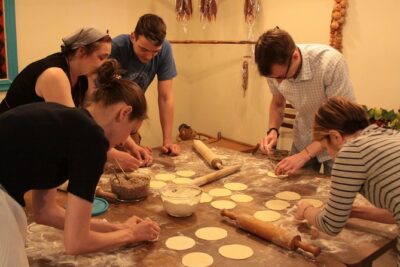
Cook True Ajarian Khachapuri and Khinkali in Highlanders Style
Read our review →

Taste of Kakheti: Wine Tour Bread Baking & Churchkhela Workshop
Read our review →
Join a Local for a Market Tour, Cooking Class and Meal in her Tbilisi Home
Read our review →
Kakheti Wine Tour with 20+ Wine Tastings & Qvevri Masterclass
Read our review →
Taste of Georgia. Cooking-Class Khinkali, Khachapuri and more
Read our review →
Kazbegi Adventure – Private Day Trip From Tbilisi with a Dinner + Masterclass
Read our review →Browse the lists this tour appears in